

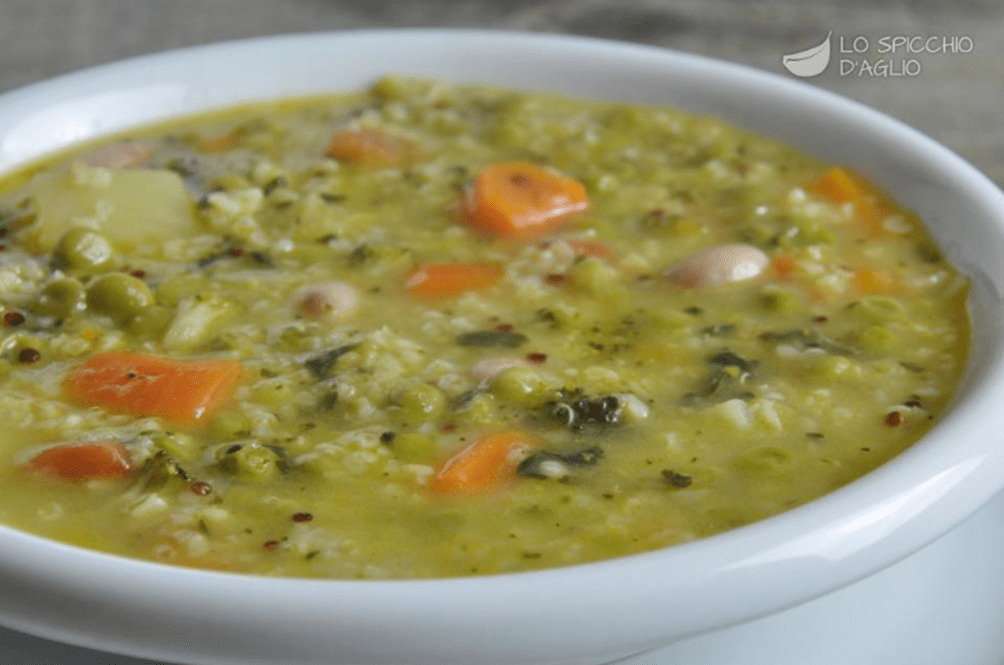
Vegetable pie with quinoa and bulgur
Source: iulm.it; lospicchiodaglio.it Photos
Presentation
A first course consisting of a minestrone prepared with quinoa and bulgur, Tropea onion, red and yellow pepper, eggplant, zucchini, cherry tomatoes, celery, carrots, asparagus, garlic, vegetable stock cube, extra virgin olive oil, basil, ginger and salt
Ingredients
Serves 4
- 240 g (8.5 oz / about 1¼ cups) quinoa and bulgur mix
- 1 Tropea red onion (or red onion)
- 1 red bell pepper and 1 yellow bell pepper
- 2 eggplants
- 4 zucchini
- 12 cherry tomatoes
- 1 celery stalk
- 2 carrots
- 2 bunches asparagus
- 1 garlic clove
- 1 vegetable bouillon cube
- 4 tablespoons extra-virgin olive oil
- Fresh basil, to taste
- Fresh ginger, to taste
- Salt, to taste
Method
Slice the onion and put it in a non-stick pan with 2 tablespoons of water and the vegetable stock cube
Sauté over very low heat
Clean and cut all the vegetables into chunks
Put them in a pan with the onion.
Add the oil and salt.
Cover with the lid and let it simmer gently until cooked.
If necessary, add 2 tablespoons of boiling water.
Cook the quinoa and bulgur with salted water and drain them when cooked
Put in a bowl with the vegetables, mix and grate the fresh ginger on top.
Allergens
Garlic: very rare cases of garlic reactivity reported
Asparagus: possible reactivity in case of birch allergy
Basil: possible cross-reaction in case of allergy to parietaria or spices
Bulgur: presence of gluten from cereals included in EU Regulation 1169/2011
Carrot: possible individual intolerance and cross-reactivity in case of allergy to pollen of Artemisia, Graminaceae, Composite, Birch
Onion: possible reactivity in case of nickel allergy due to the vegetable’s ability to concentrate it
Vegetable stock cube: check the composition for celery or other allergenic ingredients
Aubergine: possible individual intolerance or cross-reactivity in case of grass allergy
Extra virgin olive oil: unusual allergy; intolerance not described
Peppers: possible individual intolerance or cross-reactivity in case of allergy to grasses
Tomatoes: possible cross-reaction in case of sensitivity to grasses
Quinoa: does not contain gliadin but allergy to cereals could cause reactions following the consumption of quinoa.
Celery: included among the allergens in EU Regulation 1169/2011
Ginger: possible reactivity in case of intolerance to spices
Zucchini: possible individual intolerance or cross-reaction in case of allergy to Ambrosia
Notes
To be prepared and handled under strict hygienic conditions.
The ingredients of the dish bring the following benefits:
Garlic: has immune-stimulating properties, promotes liver function and the elimination of waste metabolites. It also has hypocholesterolemic, lipid-lowering, antiplatelet, hypotensive and hypoglycemic properties that promote cardiac function.
Asparagus: rich in carotenoids that support the immune system, also suitable for nephropathics, useful for the functioning of the liver for the supply of vitamins, mineral salts and antioxidants
Basil: rich in carotenoids that support the immune system and due to the content of mineral salts, vitamins and antioxidants acts to protect the cardiovascular system and the functioning of the liver
Bulgur: rich in vitamins, minerals including iron and other constituents favorable to the proper functioning of the heart and the containment of blood sugar
Carrots: rich in vitamins (B1, B2, C, PP, E, D), carotenoids, minerals and active ingredients that support the functionality of the immune system and ophthalmic, diuretic and healing functions and act to protect the cardiovascular system. Also suitable for nephropathic patients and useful for liver function for the contribution of vitamins, mineral salts and antioxidants
Onion: rich in selenium that supports the immune system and with the ability to stabilize blood glucose at normal values; carrier of quercetin, a flavonoid that helps contain cholesterol and triglyceride levels in the blood, parameters related to cardiovascular risk, which also supports liver function by promoting the purification of the body. Also suitable for nephropathic patients.
Aubergine: provides flavonoids (Vit. P ), antioxidants that enhance the action of Vit. C in favor of the immune system and mineral salts, vitamins and antioxidants that act to protect the cardiovascular system; also suitable for nephropathic patients. Useful for the functioning of the liver for the supply of vitamins, mineral salts and antioxidants
Extra virgin olive oil: source of Vitamin E that protects the immune system from harmful fatty acids
Bell pepper: rich in vitamin C and carotenoids, antioxidant par excellence that fight free radicals and support the immune system, and mineral salts; also suitable for nephropathics, vitamins and antioxidants that act to protect the cardiovascular system. Useful for the functioning of the liver for the supply of vitamins, mineral salts and antioxidants
Tomato: rich in vitamin C, the antioxidant par excellence that fights free radicals and supports the immune system, and provides mineral salts, vitamins and antioxidants that act to protect the cardiovascular system; also suitable for nephropathic patients. Useful for the functioning of the liver for the supply of vitamins, mineral salts and antioxidants
Quinoa: suitable for the diet of celiacs, it has antioxidant components that support the immune system, omega-3 fatty acids that support the cardiovascular system
Celery: rich in carotenoids that support the immune system and mineral salts, vitamins and antioxidants that act to protect the cardiovascular system and useful for the functioning of the liver for the supply of vitamins, minerals and antioxidants
Ginger: helps fight the sense of nausea and also has anti-inflammatory properties, facilitates digestion and strengthens the immune system
Zucchini: provides flavonoids (Vit. P), antioxidants that enhance the action of Vit. C in favor of the immune system and mineral salts, vitamins and antioxidants that act to protect the cardiovascular system; also suitable for nephropathics; useful for the functioning of the liver for the supply of vitamins, mineral salts and antioxidants
Safety / Intended use
Product also intended for subjects with:
- Diarrhea
- Mucositis – Inflammation and lesions of the oral cavity)
- Xerostomia (dry mouth)
- Dysphagia (Problems chewing – swallowing)