

Pasta and artichokes
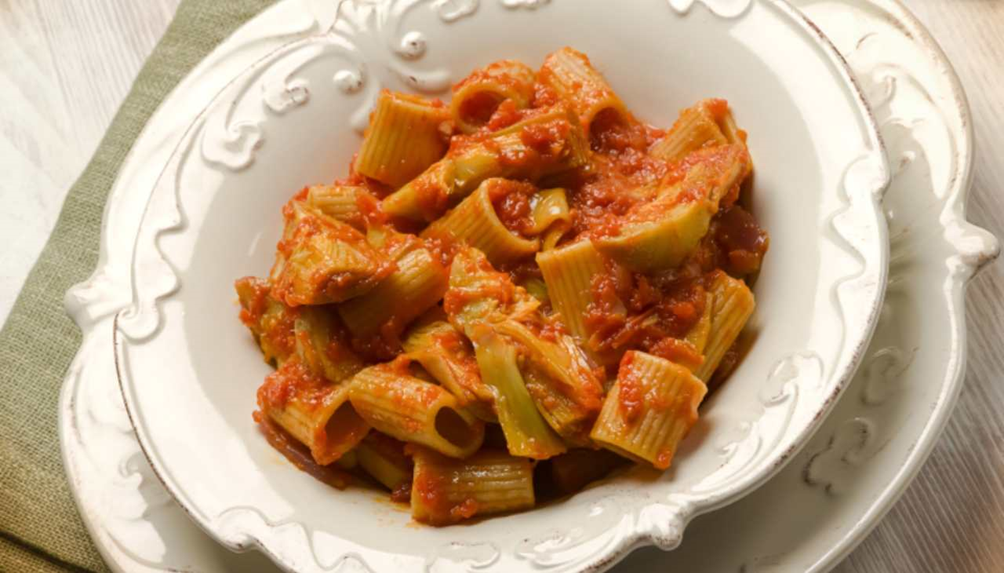
Source: diabete.net; photo ricettasprint.it
Presentation
A first course prepared with short pasta, artichokes, tomatoes, Parmigiano Reggiano PDO, lemon, extra virgin olive oil, dry white wine, garlic, parsley, stock cube, salt
Ingredients
for 4 people:
300 g (10.6 oz) short pasta
300 g (10.6 oz) frozen artichokes
300 g (10.6 oz) peeled tomatoes
2 tablespoons grated Parmigiano Reggiano PDO
1 lemon
4 tablespoons extra-virgin olive oil
4 tablespoons dry white wine
Garlic
Parsley
Stock cube
Salt
Method
Wash and finely chop a sprig of parsley together with a clove of garlic.
Place everything in a saucepan with a high edge and add the still frozen artichokes, the filtered juice of half a lemon, half a glass of white wine and the stock cube.
Put the lid on the container and cook over medium heat until the liquid has almost completely evaporated and the artichokes are tender.
Drain the tomatoes well and chop them with a fork
Add them to the artichoke sauce
Reduce the sauce to an uncovered container.
Cook the pasta, drain it without draining it excessively, place it in a bowl and season it first with the oil and Parmigiano Reggiano, mixing well
Pour the artichoke sauce over the pasta
Sprinkle with a teaspoon of chopped parsley
Serve immediately hot.
Allergens
Garlic: very rare cases of garlic reactivity reported
Artichoke: possible individual intolerance
Vegetable stock cube: check the composition for celery or other allergenic ingredients
Lemon: Lemon intolerance or possible cross-reaction in case of grass pollen allergy
Extra virgin olive oil: unusual allergy; intolerance not described
Parmigiano Reggiano PDO: contains milk allergens
Pasta: contains gluten from cereals included in EU Regulation 1169/2011
Tomatoes: possible cross-reaction in case of sensitivity to grasses
Parsley: possible cross-reaction in case of allergy to spices, mugwort, composites
Wine: presence of sulphites included among the allergens in EU Regulation 1169/2011
Notes
To be prepared and handled under strict hygienic conditions.
The ingredients of the dish bring the following benefits:
Garlic: has immune-stimulating properties, promotes liver function and the elimination of waste metabolites. It also has hypocholesterolemic, lipid-lowering, antiplatelet, hypotensive and hypoglycemic properties that promote cardiac function.
Artichoke: The cynarin of the artichoke promotes the purifying and detoxifying activity of the liver and also stimulates diuresis and fat deposition and due to the content of mineral salts, vitamins and antioxidants acts to protect the cardiovascular system, and the functioning of the liver. A species that provides folic acid linked to the production of serotonin and therefore favorable to good mood and counteract depression
Lemon: Rich in substances with antioxidant action: vitamin C, beta-carotene, cryptoxanthin, lutein and zeaxanthin, which promote the regeneration of liver cells, the functionality of the immune system and which act to protect the cardiovascular system; also suitable for nephropathic patients and useful for the functioning of the liver for the supply of vitamins, mineral salts and antioxidants. A species that provides folic acid linked to the production of serotonin and therefore favorable to good mood and counteract depression
Extra virgin olive oil: source of Vitamin E that protects the immune system from harmful fatty acids
Parmigiano Reggiano PDO: useful for the proper functioning of the liver
Pasta: if produced with wholemeal flour, which provides zinc, an element favorable to the proper functioning of the immune system; also suitable for nephropathic patients. Cereals stimulate the synthesis of serotonin which counteracts depression and promotes good mood
Tomato: rich in vitamin C, the antioxidant par excellence that fights free radicals and supports the immune system, and provides mineral salts, vitamins and antioxidants that act to protect the cardiovascular system; also suitable for nephropathic patients. Useful for the functioning of the liver for the supply of vitamins, mineral salts and antioxidants. Especially if consumed with the peel, it provides folic acid linked to the production of serotonin and therefore favorable to good mood and counteract depression
Parsley: rich in carotenoids that support the immune system and mineral salts, vitamins and antioxidants that act to protect the cardiovascular system; also suitable for nephropathic patients and useful for the functioning of the liver for the supply of vitamins, mineral salts and antioxidants
Salt: essential for the balance of body fluids and for the transmission of nerve impulses, it is however to be consumed respecting the limit of 5 g per day according to the indications of the WHO so as not to promote arterial hypertension and consequent increase in the risk of cardio-cerebrovascular diseases starting from myocardial infarction and cerebral stroke; to be limited as much as possible in the case of nephropathy.
White wine: (moderate consumption) counteracts bad cholesterol and raises the levels of good cholesterol, reducing the risk of heart attack and stroke and has a purifying and detoxifying activity favorable to the proper functioning of the liver
Safety / Intended use
Product also intended for subjects with:
- Anorexia – Weight Loss
- Nausea and Vomiting
- Constipation,
- Mucositis only if well cooked
Not recommended in case of:
- Diarrhea