

Rice, pea and lettuce soup
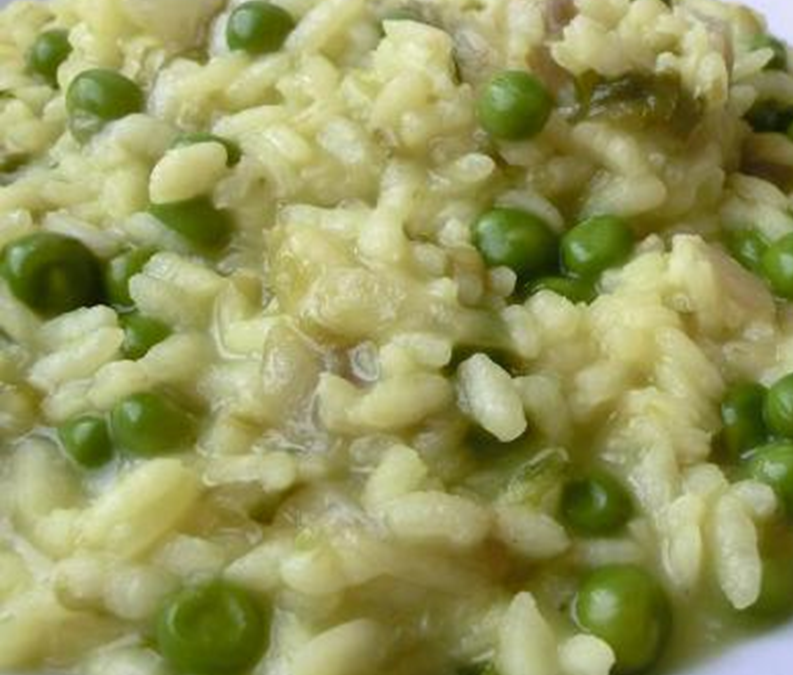
Source: diabete.net
Presentation
First course consisting of a minestrone prepared with rice, peas, lettuce, broth, parsley, Parmigiano Reggiano PDO cheese and salt
Ingredients
For 4 people:
Rice: 200 g (7 oz / ≈ 1 cup)
Peas: 200 g (7 oz / ≈ 1¼ cups)
Lettuce: 500 g (17.6 oz / ≈ 5 cups chopped)
Broth : 2 L (8.5 cups / 67.6 fl oz)
Chopped parsley: 1 teaspoon (≈ 1 g / 0.035 oz)
Parmigiano Reggiano: 20 g (0.7 oz / ≈ 2 tablespoons grated)
Salt: to taste (≈ ½ teaspoon)
Method
Pour the broth into a saucepan
Add the peas and chopped parsley
Cook until the peas are completely cooked.
At the same time, clean the lettuce, remove all the leaves, remove the stems and cut them very finely
Cook them at 3/4 in lightly salted boiling water and drain.
Bring the broth and peas to the boil
Throw in the rice and lettuce well squeezed.
Remove from heat when the rice is cooked al dente.
Add the raw oil and Parmigiano Reggiano cheese
Serve hot.
Allergens
Broth: check the composition for celery or other allergenic ingredients
Lettuce: individual cases of intolerance described
Parmigiano Reggiano PDO: contains milk allergens
Peas: possible cross-reaction in case of allergy to parietaria. The intake of peas should be avoided in case of favism.
Parsley: possible cross-reaction in case of allergy to spices, mugwort, composites
Rice: (allergy very common in the Far East, almost unknown in Italy and Europe). Possible cross-reaction in case of grass sensitivity
Notes
To be prepared and handled under strict hygienic conditions.
The ingredients of the dish bring the following benefits:
Meat broth source of proteins, minerals, amino acids, vitamins and antioxidants favorable to the proper functioning of the immune system
Vegetable broth: provides minerals, especially sodium and potassium, useful for regulating heart function and water retention.
Lettuce: salad source of carotenoids, chlorophyll and Vitamin E that protect the immune system from harmful fatty acids and mineral salts, vitamins and antioxidants that act to protect the cardiovascular system; also suitable for nephropathic patients. A species that provides folic acid linked to the production of serotonin and therefore favorable to good mood and counteract depression
Parmigiano Reggiano PDO: useful for the proper functioning of the liver
Peas: rich in vitamin C, the antioxidant par excellence that fights free radicals and supports the immune system, and provide mineral salts, vitamins and antioxidants that act to protect the cardiovascular system; also suitable for nephropathic patients. Useful for the functioning of the liver for the supply of vitamins, mineral salts and antioxidants. Especially if consumed with the peel, it provides folic acid linked to the production of serotonin and therefore favorable to good mood and counteract the depressed
Parsley: rich in carotenoids that support the immune system and mineral salts, vitamins and antioxidants that act to protect the cardiovascular system; also suitable for nephropathic patients and useful for the functioning of the liver for the supply of vitamins, mineral salts and antioxidants
Rice: due to its modest protein content, it is suitable for nephropathic and phenylketonuric patients; since it is an antiuric food, it is recommended in case of gout and hyperuricemia. It stimulates the synthesis of serotonin which counteracts depression and promotes good mood
Salt: essential for the balance of body fluids and for the transmission of nerve impulses, it is however to be consumed respecting the limit of 5 g per day according to the indications of the WHO so as not to promote arterial hypertension and consequent increase in the risk of cardio-cerebrovascular diseases starting from myocardial infarction and cerebral stroke; to be limited as much as possible in the case of nephropathy.
Safety / Intended use
Product also intended for subjects with:
- Anorexia -Weight Loss
- Nausea and vomiting
- Mucositis – Inflammation and injury of the oral cavity
Avoid administration in case of:
- Constipation
- Diarrhea if the peel is present
- Dysphagia (Chewing – swallowing problems) if not creamy in consistency