

Turkey nuggets with vegetables stewed in balsamic vinegar
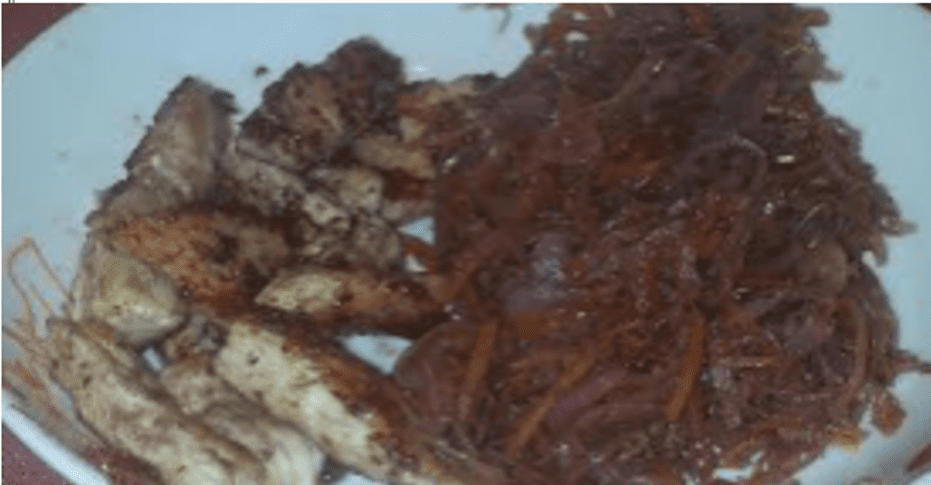
Source: nephrodiet francapasticci.it
Presentation
Second course based on turkey breast, cabbage, carrots, spring onion, red wine, flour, extra virgin olive oil, butter, balsamic vinegar, cumin, bay leaf, maggiora, pepper, salt and sugar
Ingredients
for one serving
Turkey breast 100 g;
mixed vegetables (mixed cabbage and carrots) 150 g (5.3 oz);
half a spring onion;
half a glass of red wine;
water;
flour 50 g;
extra virgin olive oil 10 g;
butter 10 g;
a tablespoon of balsamic vinegar;
spices: cumin, bay leaf, marjoram, pepper;
a pinch of salt
a pinch of sugar
Method
Work the piece of turkey into strips
Dip them in a dish with flour.
Heat a pan with a teaspoon of oil and butter, adding the bay leaf and marjoram.
Then pass the meat in the hot bottom and brown, blending with half of the red wine.
Let it dry and pass the result in a deep dish.
Prepare the vegetables together with the onion in julienne strips
Put them in a pan with a teaspoon of oil and cumin.
Start heating them and when you feel them frying, adjust with the remaining wine.
water.
When it sets again, insert the tip of a knife of salt and sugar to make the sweet and sour
At this point, add a tablespoon of balsamic vinegar.
Stir everything quickly and adjust with one or two glasses of water.
Let it stew with the lid down for at least 15-20 minutes.
Once the vegetables are stewed, heat everything together
Serve seasoning with pepper if necessary.
Allergens
Balsamic vinegar: may contain sulfites
Laurel: possible individual allergy
Butter: milk allergens (except in clarified butter) if not clarified
Carrot: possible individual intolerance and cross-reactivity in case of allergy to pollen of Artemisia, Graminaceae, Composite, Birch
Cabbage: possible reaction in case of allergy to birch or spices
Spring onion: possible reactivity in case of nickel allergy due to the vegetable’s ability to concentrate it
Cumin: possible cross-reactivity in case of allergy to Artemisia and Composite
Flour: contains gluten from cereals included in EU Regulation 1169/2011
Marjoram: possible cross-reaction in case of sensitivity to Lamiaceae (or Labiatae): thyme, sage, mint, rosemary, oregano, nepeta.
Extra virgin olive oil: unusual allergy; intolerance not described
Pepper (green, pink, black, grey, white): possible cross-reactivity in case of spice intolerance
Wine: presence of sulphites included among the allergens in EU Regulation 1169/2011
Notes
To be prepared and handled under strict hygienic conditions.
The ingredients of the dish bring the following benefits:
Balsamic vinegar: it is rich in grape polyphenols which make it an antioxidant food capable of strengthening the immune system, fighting the harmful action of free radicals, but also keeping blood sugar levels under control thanks to the presence of acetic acid and reducing blood pressure.
Laurel: leaves and berries have diuretic properties, the leaves are rich in vitamin C favorable to the proper functioning of the immune system, minerals favorable to the production of red blood cells and the functioning of the cardiovascular system
Butter: source of fat-soluble vitamins (A, D, E and K) favorable to the health of the eyes, mucous membranes, bones, immune system and blood clotting.
Turkey meat: selenium carrier that supports the immune system and free of saturated fats that do not compromise liver and circulatory system function
Carrots: rich in vitamins (B1, B2, C, PP, E, D), carotenoids, minerals and active ingredients that support the functionality of the immune system and ophthalmic, diuretic and healing functions and act to protect the cardiovascular system. Also suitable for nephropathic patients and useful for the functioning of the liver for the contribution of vitamins, mineral salts and antioxidants. They provide folic acid linked to the production of serotonin and therefore favorable to good mood and counteract depression
Cabbage: rich in vitamins A and K that help the liver in purifying activities and powerful natural anti-inflammatory, able to prevent and alleviate inflammatory and heart diseases. Also suitable for nephropathics. Useful for the functioning of the liver for the supply of vitamins, mineral salts and antioxidants. A species that provides folic acid linked to the production of serotonin and therefore favorable to good mood and counteract depression. Vitamin E strengthens the immune system, has a preventive function against many cancers and protects the digestive mucous membranes.
Spring onion: rich in selenium that supports the immune system and with the ability to stabilize blood glucose at normal values; it provides quercetin, a flavonoid that helps contain cholesterol and triglyceride levels in the blood, parameters related to cardiovascular risk, which also supports liver function by promoting the purification of the body. Also suitable for nephropathics. Especially if consumed with the peel, they provide folic acid linked to the production of serotonin and therefore favorable to good mood and counteract depression
Cumin: the beneficial effects attributed by Indian medicine to cumin in case of diarrhea and kidney stones are not recognized
Flour: provides B vitamins (thiamine, niacin, riboflavin and folate), which are important for energy metabolism and the functioning of the nervous system.
Marjoram: good source of antioxidants that promote the functioning of the cardiovascular system and immune system.
Extra virgin olive oil: source of Vitamin E that protects the immune system from harmful fatty acids
Pepper (green, pink, black, gray, white): contains piperine, a powerful antioxidant; it improves insulin sensitivity by reducing cholesterol levels and activating metabolism. Recommended for people with cardiovascular problems.
Salt: essential for the balance of body fluids and for the transmission of nerve impulses, it is however to be consumed respecting the limit of 5 g per day according to the indications of the WHO so as not to promote arterial hypertension and consequent increase in the risk of cardio-cerebrovascular diseases starting from myocardial infarction and cerebral stroke; to be limited as much as possible in the case of nephropathy.
Red wine: (moderate consumption) rich in resveratrol, it has antioxidant properties, counteracts bad cholesterol and raises the levels of good cholesterol, counteracting the risk of heart attack and stroke.
Sugar: if consumed in moderation without contraindications (diabetes, obesity,) it is the main source of energy for the body, improves thinking ability, has a positive effect on mood.
Safety / Intended use
Also intended for individuals suffering from:
- Anorexia – Weight Loss
Not recommended in case of:
- Nausea and Vomiting
- Constipation with meteorism
- Diarrhea
- Dysphagia
- Mucosite