

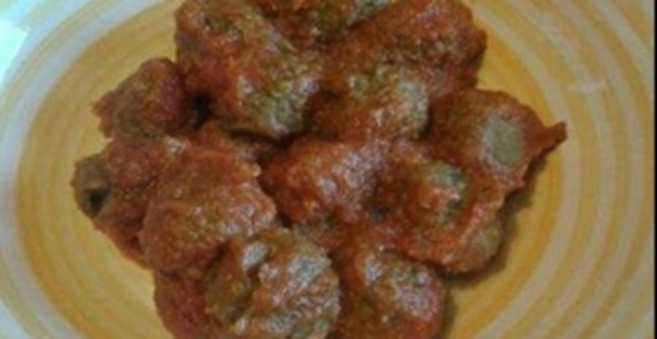
Vegan meatballs with tomato sauce
Source: nephrodiet francapasticci.it
Presentation
Second course consisting of meatballs prepared with lentils, spring onion, bread, paprika, curry, parsley and oat “milk” with sauce prepared with tomato puree, carrot, celery, herbs de Provence and extra virgin olive oil.
Ingredients
for 4 people
Lentils: 250 g (8.8 oz / ≈ 1¼ cups cooked or ≈ 1 cup dry, depending on use)
Spring onion: 1 (≈ 30 g / 1 oz)
Breadcrumbs: 50 g (1.8 oz / ≈ ½ cup)
Black pepper: to taste (≈ ¼ teaspoon)
Paprika: to taste (≈ 1 teaspoon)
Curry: to taste (≈ 1 teaspoon)
Parsley: to taste (≈ 1 tablespoon chopped / 2 g)
Oat milk: ≈ 50 g / 50 ml (1.7 fl oz / ≈ 3 tablespoons)
For the sauce:
Tomato purée: 200 g (7 oz / ≈ ¾ cup)
Carrot: 1 piece (≈ 50 g / 1.8 oz)
Celery: 1 piece (≈ 30 g / 1 oz)
Herbes de Provence – to taste (≈ 1 teaspoon)
Extra-virgin olive oil: 50 g / 50 ml (1.7 fl oz / ≈ 3½ tablespoons)
Method
Boil the lentils
Blend together with the spring onion.
Mix with breadcrumbs, pepper, paprika, curry and parsley.
If the dough is too dry, add vegetable “milk”
Form the meatballs
Let them rest.
Prepare the sauce by making a base of carrot, celery, onion and herbes de Provence and a tablespoon of oil.
Add the tomato
Towards the end of cooking, add the meatballs.
Serve with a tablespoon of oil
Allergens
Carrot: possible individual intolerance and cross-reactivity in case of allergy to pollen of Artemisia, Graminaceae, Composite, Birch
Spring onion: possible reactivity in case of nickel allergy due to the vegetable’s ability to concentrate it
Spring onion: possible reactivity in case of nickel allergy due to the vegetable’s ability to concentrate it
Provençal herbs: check allergenicity of the components
“Oat milk”: it provides factors that promote the functionality of the immune system and regulate blood sugar, useful for the functioning of the liver for the supply of vitamins, mineral salts and antioxidants
Lentils: bearer of factors promoting the functionality of the immune system and regulating blood sugar and mineral salts, vitamins and antioxidants that act to protect the cardiovascular system; also suitable for nephropathic patients and useful for the functioning of the liver for the supply of vitamins, mineral salts and antioxidants
Extra virgin olive oil: unusual allergy; intolerance not described
Bread: cereals containing gluten included in EU Regulation 1169/2011
Paprika: possible cross-reactivity in case of intolerance to spices
Tomatoes: possible cross-reaction in case of sensitivity to grasses
Parsley: possible cross-reaction in case of allergy to spices, mugwort, composites
Celery: included among the allergens in EU Regulation 1169/2011
Notes
To be prepared and handled under strict hygienic conditions.
“Milk” is a very common term but by law it can only be used for the mammary secretion of animals. In fact, in 2017 the Court of Justice of the European Union prohibited the use of the term “milk” for plant products. It is therefore correct to speak of a drink
The ingredients of the dish bring the following benefits:
Carrots: rich in vitamins (B1, B2, C, PP, E, D), carotenoids, minerals and active ingredients that support the functionality of the immune system and ophthalmic, diuretic and healing functions and act to protect the cardiovascular system. Also suitable for nephropathic patients and useful for liver function for the contribution of vitamins, mineral salts and antioxidants
Spring onion: rich in selenium that supports the immune system and with the ability to stabilize blood glucose at normal values; it provides quercetin, a flavonoid that helps contain cholesterol and triglyceride levels in the blood, parameters related to cardiovascular risk, which also supports liver function by promoting the purification of the body. Also suitable for nephropathics.
Curry: able to strengthen the immune system
Provençal herbs: check properties of the components
“Oat milk”: it provides factors that promote the functionality of the immune system and regulate blood sugar, useful for the functioning of the liver for the supply of vitamins, mineral salts and antioxidants
Lentils: bearer of factors promoting the functionality of the immune system and regulating blood sugar and mineral salts, vitamins and antioxidants that act to protect the cardiovascular system; also suitable for nephropathic patients and useful for the functioning of the liver for the supply of vitamins, mineral salts and antioxidants
Lovage: has diuretic properties
Extra virgin olive oil: source of Vitamin E that protects the immune system from harmful fatty acids
Wholemeal bread: source of fiber that supports the intestinal microbiota, improves intestinal transit and provides B vitamins and minerals that strengthen the immune system; also suitable for kidney patients.
Paprika: rich in vitamin C, the antioxidant par excellence that fights free radicals and supports the immune system
Tomato: rich in vitamin C, the antioxidant par excellence that fights free radicals and supports the immune system, and provides mineral salts, vitamins and antioxidants that act to protect the cardiovascular system; also suitable for nephropathic patients. Useful for the functioning of the liver for the supply of vitamins, mineral salts and antioxidants
Parsley: rich in carotenoids that support the immune system and mineral salts, vitamins and antioxidants that act to protect the cardiovascular system; also suitable for nephropathic patients and useful for the functioning of the liver for the supply of vitamins, mineral salts and antioxidants
Celery: rich in carotenoids that support the immune system and mineral salts, vitamins and antioxidants that act to protect the cardiovascular system and useful for the functioning of the liver for the supply of vitamins, mineral salts and antioxidants. Suitable for those with cholesterol problems, as it promotes its disposal.
Safety / Intended use
Also intended for individuals suffering from:
- Anorexia – Weight Loss
- Xerostomia (dry mouth)
In the presence of dysphagia (problems with chewing and swallowing), present the whole meatballs to the child and then crush them or cut them into small pieces of uniform size.
With caution based on tenderness, roughness, acidity and spiciness in the case of Mucositis (inflammation and lesions of the oral cavity)
Not recommended in case of:
- Nausea and Vomiting