

Virtues of Teramo
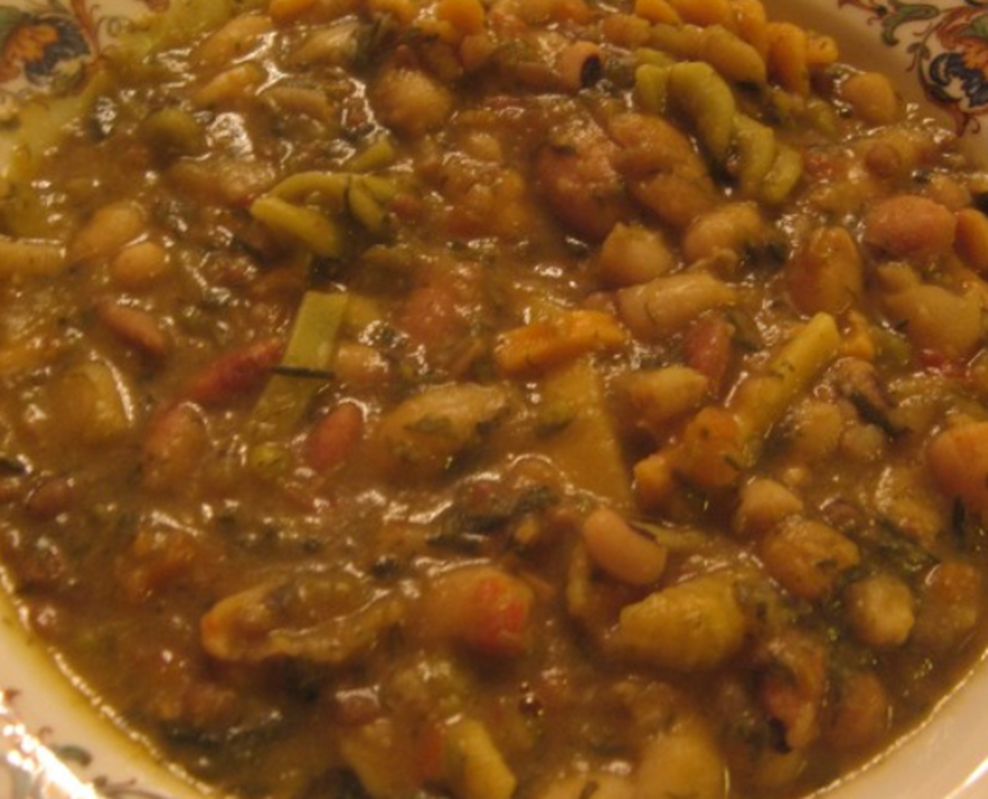
Source: diabete.net; lucianopignataro.it Photos
Presentation
A nutritious recipe, consisting of a first course prepared with dry and fresh pasta, pork, chickpeas, lentils, broad beans and peas, fennel, chard, endive, spinach, fennel, chard, endive, spinach), onion, garlic, parsley, tomatoes, extra virgin olive oil, salt, mint, marjoram
Ingredients
for 4 people:
Fresh pasta – 50 g (1.8 oz / ≈ ½ cup)
Dry pasta – 50 g (1.8 oz / ≈ ½ cup)
Pork leg – 120 g (4.2 oz)
Dried legumes (chickpeas, lentils, broad beans, peas mix) – 150 g (5.3 oz / ≈ ¾ cup)
Vegetables (fennel, chard, endive, spinach mix) – 200 g (7 oz / ≈ 4 cups chopped)
Onion – 1 medium (≈ 150 g / 5.3 oz)
Garlic – 2 cloves (≈ 6 g / 0.2 oz)
Parsley – 1 sprig (≈ 1 tablespoon chopped / 2 g)
Tomatoes – 200 g (7 oz / ≈ 1½ cups chopped)
Extra-virgin olive oil – 40 g / 40 ml (≈ 3 tablespoons)
Salt – to taste (≈ ½ teaspoon)
Mint – to taste (≈ 1 teaspoon chopped / 1 g)
Marjoram – to taste (≈ 1 teaspoon / 1 g)
Method
Soak the dried legumes separately, except for the lentils
Cook them halfway in plenty of water over low heat.
Clean the vegetables, boil them and set aside.
In a saucepan, boil the pork in a little water, cut it into small pieces and put it back in its cooking liquid.
Add the cooked dried legumes and a few mint and marjoram leaves.
Sauté the chopped onion, minced garlic and tomato in a pan and add them to the soup.
Finally, add the shredded vegetables, pasta and cook everything for a few more minutes.
The virtues of the teraman can be served both hot and cold.
Allergens
Garlic: very rare cases of garlic reactivity reported
Swiss chard: possible individual intolerance
Chickpeas: contain proteins that can trigger allergic reactions in some individuals
Onion: possible reactivity in case of nickel allergy due to the vegetable’s ability to concentrate it
Broad beans: possible allergies in predisposed individuals; cause of favism, reaction to the intake of broad beans in subjects with a genetic abnormality (absence of the enzyme G6PD: glucose-6-phosphate dehydrogenase.
Fennel: possible cross-reaction in case of allergy to Birch, Artemisia and Composite
Endive: possible cases of individual reactivity
Lentils: cases of lentil allergy described, albeit rare,
Marjoram: possible cross-reaction in case of sensitivity to Lamiaceae (or Labiatae): thyme, sage, mint, rosemary, oregano, nepeta.
Mint or nepetella: possible allergic reactions
Extra virgin olive oil: unusual allergy; intolerance not described
Pasta: contains gluten from cereals included in EU Regulation 1169/2011
Peas: possible cross-reaction in case of allergy to parietaria. The intake of peas should be avoided in case of favism.
Tomatoes: possible cross-reaction in case of sensitivity to grasses
Parsley: possible cross-reaction in case of allergy to spices, mugwort, composites
Spinach: possible cases of individual intolerance or cross-reactivity in case of birch allergy
Notes
To be prepared and handled under strict hygienic conditions.
The ingredients of the dish bring the following benefits:
Garlic: has immune-stimulating properties, promotes liver function and the elimination of waste metabolites. It also has hypocholesterolemic, lipid-lowering, antiplatelet, hypotensive and hypoglycemic properties that promote cardiac function.
Swiss chard: it has antioxidant and anti-inflammatory properties, favorable to the functioning of the immune system, purifying favorable to the proper functioning of the liver and favorable to hematopoiesis and improvement of cardiovascular circulation. A species that provides folic acid linked to the production of serotonin and therefore favorable to good mood and counteract depression
Pork: rich in selenium that supports the immune system. To reduce the presence of potassium, boil the meat in plenty of water which is then eliminated.
Chickpeas: bearer of factors that promote the functionality of the immune system and regulate blood sugar and due to the content of mineral salts, vitamins and antioxidants, it acts to protect the cardiovascular system; also suitable for nephropathic patients and useful for the functioning of the liver for the contribution of vitamins, mineral salts and antioxidants.
Onion: it is rich in selenium which supports the immune system and with the ability to stabilize blood glucose at normal values; it provides quercetin, a flavonoid that helps contain cholesterol and triglyceride levels in the blood, parameters related to cardiovascular risk, which also supports liver function by promoting the purification of the body. Also indicated for nephropathic patients, it is a good diuretic that prevents kidney stones. It provides folic acid linked to the production of serotonin and therefore favorable to good mood and counteract depression
Broad beans: rich in iron, potassium, magnesium, copper, selenium and many vitamins, especially ascorbic acid which helps support the immune system and neutralizes the action of free radicals, promote hematopoiesis and help reduce cholesterolemia and blood sugar, promoting the functionality of the cardiovascular system. Especially if consumed with the peel, they provide folic acid linked to the production of serotonin and therefore favorable to good mood and counteract depression
Fennel: favorable to the proper functioning of the cardiovascular system because they are rich in vitamin K, which helps protect the arteries and nitrates that reduce blood pressure, slow down the aging of the arteries, improve the functionality of the lining of blood vessels. A species that provides folic acid linked to the production of serotonin and therefore favorable to good mood and counteract depression
Endive: salad source of carotenoids, chlorophyll and Vitamin E that protect the immune system from harmful fatty acids and mineral salts, vitamins and antioxidants that act to protect the cardiovascular system; also suitable for nephropathic patients. A species that provides folic acid linked to the production of serotonin and therefore favorable to good mood and counteract depression
Lentils: bearer of factors promoting the functionality of the immune system and regulating blood sugar and mineral salts, vitamins and antioxidants that act to protect the cardiovascular system; also suitable for nephropathic patients and useful for the functioning of the liver for the supply of vitamins, mineral salts and antioxidants
Marjoram: good source of antioxidants that promote the functioning of the cardiovascular system and immune system.
Mint or nepetella: helps fight inflammatory states,
Extra virgin olive oil: source of Vitamin E that protects the immune system from harmful fatty acids
Pasta: if produced with wholemeal flour, which provides zinc, an element favorable to the proper functioning of the immune system; also suitable for nephropathic patients. Cereals stimulate the synthesis of serotonin which counteracts depression and promotes good mood
Peas: rich in vitamin C, the antioxidant par excellence that fights free radicals and supports the immune system, and provide mineral salts, vitamins and antioxidants that act to protect the cardiovascular system; also suitable for nephropathic patients. Useful for the functioning of the liver for the supply of vitamins, mineral salts and antioxidants. Especially if consumed with the peel, it provides folic acid linked to the production of serotonin and therefore favorable to good mood and counteract the depressed
Tomato: rich in vitamin C, the antioxidant par excellence that fights free radicals and supports the immune system, and provides mineral salts, vitamins and antioxidants that act to protect the cardiovascular system; also suitable for nephropathic patients. Useful for the functioning of the liver for the supply of vitamins, mineral salts and antioxidants. Especially if consumed with the peel, it provides folic acid linked to the production of serotonin and therefore favorable to good mood and counteract depression
Parsley: rich in carotenoids that support the immune system and mineral salts, vitamins and antioxidants that act to protect the cardiovascular system; also suitable for nephropathic patients and useful for the functioning of the liver for the supply of vitamins, mineral salts and antioxidants
Salt: essential for the balance of body fluids and for the transmission of nerve impulses, it is however to be consumed respecting the limit of 5 g per day according to the indications of the WHO so as not to promote arterial hypertension and consequent increase in the risk of cardio-cerebrovascular diseases starting from myocardial infarction and cerebral stroke; to be limited as much as possible in the case of nephropathy.
Spinach: rich in carotenoids that support the immune system and mineral salts, vitamins and antioxidants that act to protect the cardiovascular system; also suitable for nephropathic patients; useful for the functioning of the liver for the supply of vitamins, mineral salts and antioxidants. They provide folic acid linked to the production of serotonin and therefore favorable to good mood and counteract depression
Safety / Intended use
Product also intended for subjects with:
- Anorexia – Weight Loss
- Constipation
- Mucositis only in the case of pasta and very cooked vegetables
Not recommended in case of:
- Constipation with meteorism
- Diarrhea
- Dysphagia