

Cabbage risotto
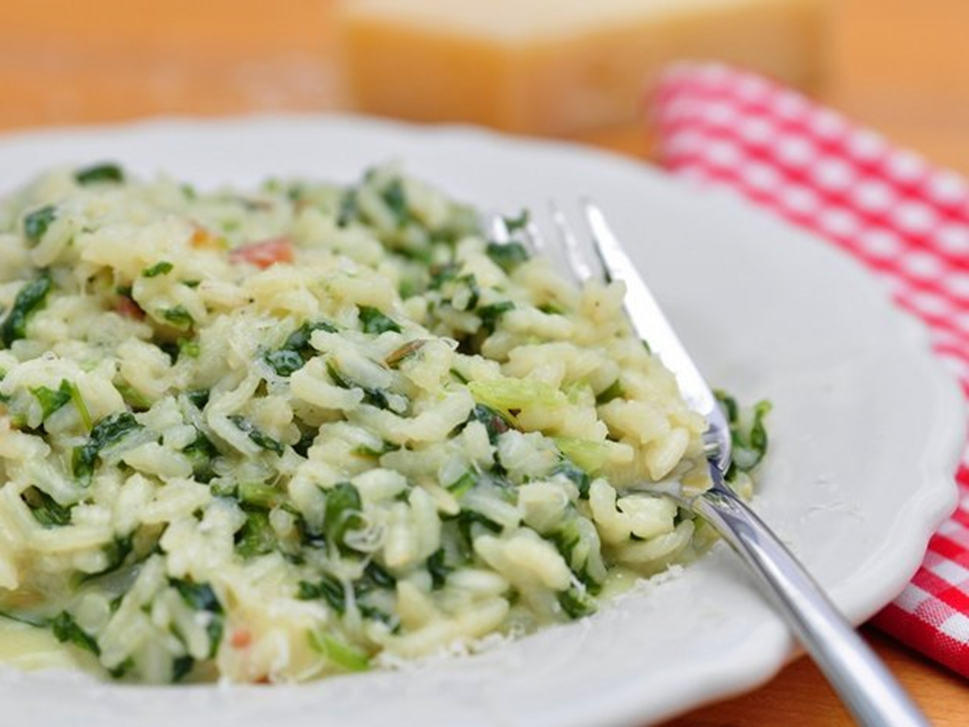
Source: nephrocare.it
Presentation
First course of risotto prepared with cabbage, extra virgin olive oil, rice, white wine, vegetable broth, salt, pepper, black olives, hard cheese, chervil, parsley
Ingredients
for 2 people
1 onion
400 g (14.1 oz) pointed cabbage (sweetheart cabbage)
3 tablespoons extra-virgin olive oil
150 g (5.3 oz) risotto rice
100 ml (3.4 fl oz) white wine
300 ml (10.1 fl oz) hot vegetable broth
Salt, to taste
Freshly ground black pepper, to taste
40 g (1.4 oz) black olives
60 g (2.1 oz) hard cheese, grated or shaved
2 tablespoons chopped chervil
2 tablespoons chopped parsley
Method
Cut the onion into cubes.
Peel the cabbage and cut it in half lengthwise.
Remove the core and cut the cabbage into pieces.
Heat the olive oil and cook the onions until transparent.
Add the rice and toast it until it is translucent.
Deglaze with white wine and cook until the rice has absorbed all the liquid. Add the cabbage and 150 ml of hot vegetable broth.
Season with salt and pepper.
Cook for another 15-18 minutes, gradually adding another 200-300 ml of hot vegetable broth.
Cut the olives (pitted) in half lengthwise.
Add them to the risotto together with the grated cheese and chopped herbs.
Allergens
Vegetable broth: check the composition for celery or other allergenic ingredients
Cabbage: possible reaction in case of allergy to birch or spices
Chervil: possible allergic reaction
Hard cheese: milk allergens
Extra virgin olive oil: unusual allergy; intolerance not described
Olives: olive allergy is very rare: a case described in Spain
Pepper: possible cross-reactivity in case of intolerance to spices
Parsley: possible cross-reaction in case of allergy to spices, mugwort, composites
Rice: (allergy very common in the Far East, almost unknown in Italy and Europe). Possible cross-reaction in case of grass sensitivity
Wine: presence of sulphites included among the allergens in EU Regulation 1169/2011
Notes
To be prepared and handled under strict hygienic conditions.
The ingredients of the dish bring the following benefits:
Vegetable broth: provides minerals, especially sodium and potassium, useful for regulating heart function and water retention.
Cabbage: rich in vitamins A and K that help the liver in purification activities and powerful natural anti-inflammatory, able to prevent and alleviate inflammatory and heart diseases. Also suitable for nephropathics. Useful for the functioning of the liver for the supply of vitamins, mineral salts and antioxidants. Vitamin E strengthens the immune system, has a preventive function against many cancers and protects the digestive mucous membranes.
Chervil: useful against water retention and to combat high blood pressure.
Hard cheese: useful for the proper functioning of the liver
Extra virgin olive oil: source of Vitamin E that protects the immune system from harmful fatty acids
Olive: source of Vitamin E that protects the immune system from harmful fatty acids. Useful for liver function for the supply of omega 3 and 6 fatty acids
Pepper: contains piperine, a powerful antioxidant; improves insulin sensitivity by reducing cholesterol levels and activating metabolism. Recommended for people with cardiovascular problems.
Parsley: rich in carotenoids that support the immune system and mineral salts, vitamins and antioxidants that act to protect the cardiovascular system; also suitable for nephropathic patients and useful for the functioning of the liver for the supply of vitamins, mineral salts and antioxidants
Rice: due to its modest protein content, it is suitable for nephropathic and phenylketonuric patients; since it is an antiuric food, it is recommended in case of gout and hyperuricemia.
White wine: (moderate consumption) counteracts bad cholesterol and raises the levels of good cholesterol, reducing the risk of heart attack and stroke and has a purifying and detoxifying activity favorable to the proper functioning of the liver
Safety / Intended use
Product also intended for subjects with:
- Mucositis (Inflammation and lesions of the oral cavity) only well cooked
- Xerostomia (dry mouth) if well cooked
- Dysphagia (only if in pieces of uniform size and consistency)
Not recommended in case of:
- Diarrhea