

Pike-perch with sauerkraut and mushroom sauce and white wine
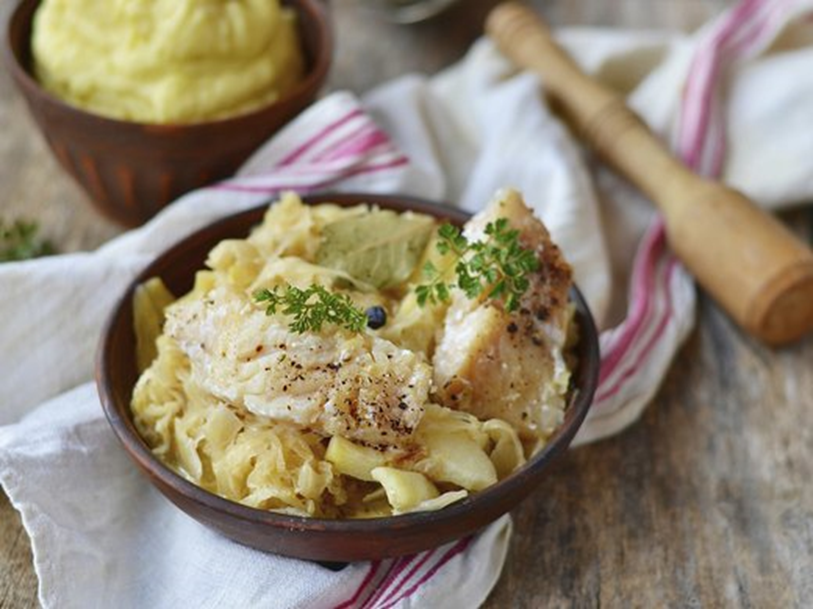
Source: nephrocare.it
Presentation
A nutritious recipe, consisting of a second course of German origin prepared with sauerkraut, onion, extra virgin olive oil, white wine, salt, pepper, juniper berries, bay leaf, mushrooms, shallots, butter, fish broth, soy cream, pike-perch, flour
Ingredients
Serves 4
325 g (11.5 oz) canned sauerkraut
2 small onions
2 tablespoons extra-virgin olive oil
200 ml dry white wine
Salt, to taste
Freshly ground black pepper, to taste
5 juniper berries
1 bay leaf
200 g (7.1 oz) mushrooms
2 shallots
1 tablespoon butter
150 ml fish stock
150 ml soy cream
4 zander (pike-perch) fillets with skin, scaled
A little flour, for dusting
Method
Rinse the sauerkraut thoroughly and let it drain or squeeze it.
Peel the onions and cut them into thin slices.
Heat 1 tablespoon of oil in a pan and sauté the onion over medium heat until soft.
Add the sauerkraut and deglaze with 70 ml of white wine.
Season with salt and pepper, add the juniper berries and a bay leaf
Stew them over low heat and in a covered pot for 15 minutes, stirring regularly.
In the meantime, clean the mushrooms, remove the stems and cut the heads into four parts.
Peel the shallots and finely cut them into cubes.
Heat the butter in a saucepan and sauté the mushrooms with the finely chopped shallots in the melted butter until tender, stirring constantly.
Add the remaining white wine and reduce by half,
Pour in the remaining fish broth and reduce it by half again.
Add the soy cream and continue cooking until you get a creamy sauce, which you will keep warm.
Make small incisions on the skin of the pike-perch
Heat 1 tablespoon of oil in a pan.
Season the fish with salt and pepper and then dip it in flour.
Transfer it to the pan skin side down and fry it for 7-8 minutes over medium heat, until crispy.
Turn the fish over and fry it for another 2-3 minutes.
Put the sauerkraut on plates, place the fish on top and serve with the sauce.
Allergens
Laurel: possible individual allergy
Juniper berries: specific allergy even if mainly concerning pollen
Fish broth: allergens of fish products, included among the allergens in EU Regulation 1169/2011. Contraindicated in case of gastritis, hiatal hernia, esophageal sphincter incontinence, gastric reflux.
Butter: milk allergens (except in clarified butter) if not clarified
Onion: possible reactivity in case of nickel allergy due to the vegetable’s ability to concentrate it
Sauerkraut: possible reaction of cabbage in case of allergy to birch or spices; check the label for the presence of celery, gluten. milk and sulphur dioxide/sulphites.
Flour: contains gluten from cereals included in EU Regulation 1169/2011
Mushrooms: cases of intolerance described
Pike-perch: fish is included among the allergens in EU Regulation 1169/2011
Extra virgin olive oil: unusual allergy; intolerance not described
Soy: included among the allergens in EU Regulation 1169/2011, which can also generate cross-reaction in cases of allergy to Gramineae, Birch and Parietaria.
Pepper (green, pink, black, grey, white): possible cross-reactivity in case of spice intolerance
Shallots: cases of individual reactivity reported
Wine: presence of sulphites included among the allergens in EU Regulation 1169/2011
Notes
To be prepared and handled under strict hygienic conditions.
The ingredients of the dish bring the following benefits:
Laurel: leaves and berries have diuretic properties, the leaves are rich in vitamin C favorable to the proper functioning of the immune system, minerals favorable to the production of red blood cells and the functioning of the cardiovascular system
Juniper berries: has diuretic properties; the extract is used in case of liver dysfunction (chronic hepatitis, liver failure, liver cirrhosis, hypertrophic alcoholic cirrhosis, hepatic colic); in case of renal dysfunction (renal failure, water retention, lipoid nephrosis, oliguria, gout), in case of diabetes mellitus, hypercholesterolemia, and arteriosclerosis.
Fish broth: suitable for all diets, rich in collagen, useful against constipation.
Butter: source of fat-soluble vitamins (A, D, E and K) favorable to the health of the eyes, mucous membranes, bones, immune system and blood clotting.
Onion: it is rich in selenium which supports the immune system and with the ability to stabilize blood glucose at normal values; it provides quercetin, a flavonoid that helps contain cholesterol and triglyceride levels in the blood, parameters related to cardiovascular risk, which also supports liver function by promoting the purification of the body. Also indicated for nephropathic patients, it is a good diuretic that prevents kidney stones. It provides folic acid linked to the production of serotonin and therefore favorable to good mood and counteract depression
Sauerkraut: rich in probiotics, fiber, vitamins (C and K) and minerals that strengthen the immune system and have antioxidant and anti-inflammatory properties.
Flour: provides B vitamins (thiamine, niacin, riboflavin and folate), which are important for energy metabolism and the functioning of the nervous system.
Champignon mushrooms: contain vitamin C and selenium that help counteract oxidative stress and protect cells from damage, B vitamins that promote metabolism and the nervous system and beta-glucans that are favorable to the immune system and organic defenses.
Pike-perch: provides zinc and selenium, elements that promote the proper functioning of the immune system by hindering the formation of prostaglandins that prevent proper cellular functioning and has a high content of omega 3 fatty acids, which inhibit platelet aggregation (cardiovascular risk factor). Useful for liver function due to the supply of zinc, selenium and omega 3 and 6 fatty acids. Essential fatty acids, such as omega 3 and 6, have an antidepressant effect and maintain efficient nervous system and memory
Extra virgin olive oil: source of Vitamin E that protects the immune system from harmful fatty acids keep the nervous system and memory efficient.
Soy: provides flavonoids (Vit. P), antioxidants that enhance the action of Vit. C in favor of the immune system and against cardiovascular risk; also suitable for nephropathic patients and useful for the functioning of the liver for the supply of vitamins, mineral salts and antioxidants. Especially if consumed whole, it provides folic acid linked to the production of serotonin and therefore favorable to good mood and counteract the depressed
Pepper (green, pink, black, gray, white): contains piperine, a powerful antioxidant; it improves insulin sensitivity by reducing cholesterol levels and activating metabolism. Recommended for people with cardiovascular problems.
Salt: essential for the balance of body fluids and for the transmission of nerve impulses, it is however to be consumed respecting the limit of 5 g per day according to the indications of the WHO so as not to promote arterial hypertension and consequent increase in the risk of cardio-cerebrovascular diseases starting from myocardial infarction and cerebral stroke; to be limited as much as possible in the case of nephropathy.
Shallots: rich in selenium that supports the immune system and with the ability to stabilize blood glucose at normal values; carrier of quercetin, a flavonoid that helps contain cholesterol and triglyceride levels in the blood, parameters related to cardiovascular risk, which also supports liver function by promoting the purification of the body. Also suitable for nephropathics. A species that provides folic acid linked to the production of serotonin and therefore favorable to good mood and counteract depression
White wine: (moderate consumption) counteracts bad cholesterol and raises the levels of good cholesterol, reducing the risk of heart attack and stroke and has a purifying and detoxifying activity favorable to the proper functioning of the liver
Safety / Intended use
Product also intended for subjects with:
- Anorexia – Weight Loss
- Mucositis (inflammation and injury of the oral cavity) only if not too acidic
Not recommended in case of:
- Constipation
- Diarrhea
- Dysphagia (difficulty chewing and swallowing)