

Salmon in a herb and lemon crust and spring vegetables in herb cream with rice
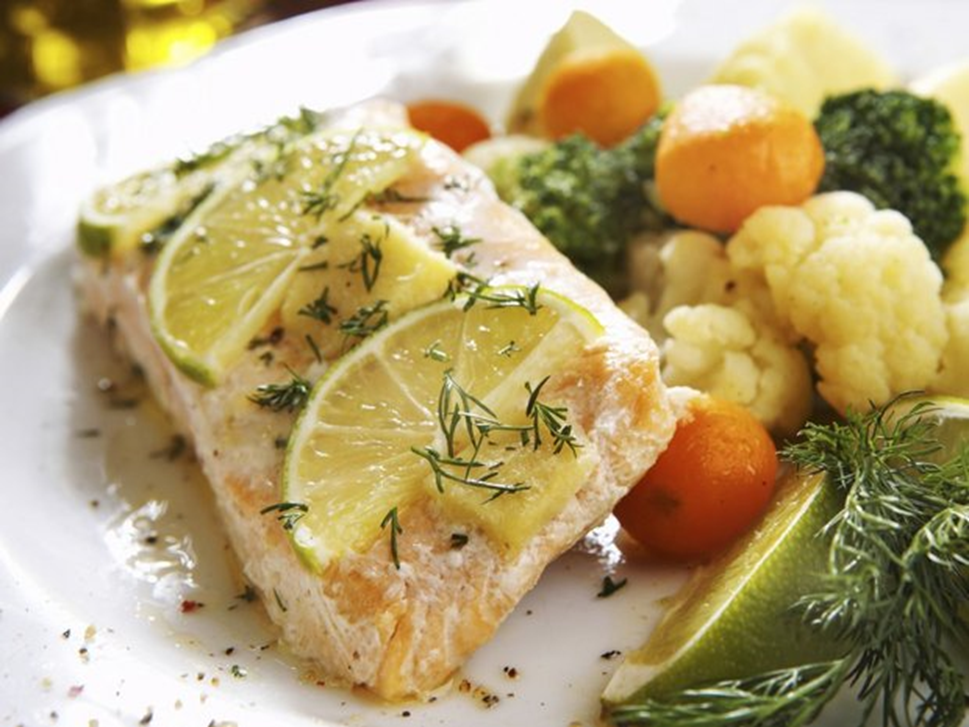
Source: nephrocare.it
Presentation
A nutritious recipe, consisting of a main course or single course of German origin prepared with lemon, wholemeal bread, butter, coriander, parsley, mustard, salmon, pepper, spring onions, rapeseed oil, sugar, carrots, parsnips, green beans, cabbage, cream, pepper, cheese, rice
Ingredients
Serves 4
Herb and Lemon Crusted Salmon
½ tablespoon grated lemon zest
20 g (0.7 oz) whole wheat breadcrumbs
30 g (1.1 oz) butter
1 teaspoon ground coriander
2 tablespoons finely chopped parsley
1 teaspoon medium-hot mustard
400 g (14.1 oz) salmon fillets
Freshly ground black pepper, to taste
Creamy Spring Vegetables with Herbs and Rice
50 g (1.8 oz) spring onions (scallions)
1–2 tablespoons canola oil
1 tablespoon sugar
750 g (26.5 oz) mixed spring vegetables (such as carrots, parsnips, green beans, and cabbage)
125 ml (4.2 fl oz) heavy cream (30% fat)
2 bunches fresh herbs
1 cup reduced-fat herb cream cheese (less than 10% fat)
200 g (7.1 oz) uncooked white rice
Freshly ground black pepper, to taste
Method
Mix the lemon zest with the wholemeal breadcrumbs and butter.
Add the coriander, parsley and mustard.
Spread the crust over the seasoned salmon and bake it in a convection oven at 150 ° C for 12-15 minutes.
Wash the vegetables, cut them into slices and leave them to soak in warm water for at least two hours.
Boil them for 20-25 minutes, possibly changing the water halfway through cooking.
Drain the cooking water.
Chop the herbs.
Mix the cream with the herb cream cheese and heat them in a pot. Add a portion of herbs and use the remaining herbs to sprinkle over the vegetables.
Boil the rice in boiling water for 25-30 minutes.
Allergens
Butter: milk allergens (except in clarified butter) if not clarified
Carrot: possible individual intolerance and cross-reactivity in case of allergy to pollen of Artemisia, Graminaceae, Composite, Birch
Cabbage: possible reaction in case of allergy to birch or spices
Spring onion: possible reactivity in case of nickel allergy due to the vegetable’s ability to concentrate it
Coriander: possible cross-reactivity in case of allergy to Artemisia and Composites
Green beans: possible cross-reaction in case of allergy to parietaria
Cheese: milk allergens
Lemon: Lemon intolerance or possible cross-reaction in case of grass pollen allergy
Rapeseed oil: there are no known episodes of direct allergy even cross-reactions are possible in case of allergy to other cruciferous vegetables such as cabbage, broccoli or mustard
Bread: cereals containing gluten included in EU Regulation 1169/2011
Cream: presence of lactose and milk proteins
Parsnips: possible individual intolerance
Pepper (green, pink, black, grey, white): possible cross-reactivity in case of spice intolerance
Parsley: possible cross-reaction in case of allergy to spices, mugwort, composites
Rice: (allergy very common in the Far East, almost unknown in Italy and Europe). Possible cross-reaction in case of grass sensitivity
Salmon: fish is included among the allergens in EU Regulation 1169/2011
Mustard: included among the allergens in EU Regulation 1169/2011
Notes
To be prepared and handled under strict hygienic conditions.
The ingredients of the dish bring the following benefits:
Butter: source of fat-soluble vitamins (A, D, E and K) favorable to the health of the eyes, mucous membranes, bones, immune system and blood clotting.
Carrots: rich in vitamins (B1, B2, C, PP, E, D), carotenoids, minerals and active ingredients that support the functionality of the immune system and ophthalmic, diuretic and healing functions and act to protect the cardiovascular system. Also suitable for nephropathic patients and useful for the functioning of the liver for the contribution of vitamins, mineral salts and antioxidants. They provide folic acid linked to the production of serotonin and therefore favorable to good mood and counteract depression
Cabbage: rich in vitamins A and K that help the liver in purification activities and powerful natural anti-inflammatory, able to prevent and alleviate inflammatory and heart diseases. Also suitable for nephropathics. Useful for the functioning of the liver for the supply of vitamins, mineral salts and antioxidants. A species that provides folic acid linked to the production of serotonin and therefore favorable to good mood and counteract depression. Vitamin E strengthens the immune system, has a preventive function against many cancers and protects the digestive mucous membranes.
Spring onion: rich in selenium that supports the immune system and with the ability to stabilize blood glucose at normal values; it provides quercetin, a flavonoid that helps contain cholesterol and triglyceride levels in the blood, parameters related to cardiovascular risk, which also supports liver function by promoting the purification of the body. Also suitable for nephropathics. They provide folic acid linked to the production of serotonin and therefore favorable to good mood and counteract depression
Coriander: useful in case of digestive problems also stimulating the appetite and able to alleviate tiredness and fatigue.
Green beans: provide flavonoids (Vit. P), antioxidants that enhance the action of Vit. C in favor of the immune system and mineral salts, vitamins and antioxidants that act to protect the cardiovascular system; also suitable for nephropathic patients. Useful for the functioning of the liver for the supply of vitamins, mineral salts and antioxidants. Especially if consumed with the peel, they provide folic acid linked to the production of serotonin and therefore favorable to good mood and counteract depression
Cheeses: useful for the functioning of the liver for the supply of vitamins, mineral salts and antioxidants. The presence of tryptophan helps to counteract depression. Contribution of flora useful for the protection and proper functioning of the intestine.
Lemon: Rich in substances with antioxidant action: vitamin C, beta-carotene, cryptoxanthin, lutein and zeaxanthin, which promote the regeneration of liver cells, the functionality of the immune system and which act to protect the cardiovascular system; also suitable for nephropathic patients and useful for the functioning of the liver for the supply of vitamins, mineral salts and antioxidants. A species that provides folic acid linked to the production of serotonin and therefore favorable to good mood and counteract depression
Rapeseed oil: rich in polyunsaturated fatty acids favorable to the proper functioning of the cardiovascular system
Wholemeal bread: source of fiber that supports the intestinal microbiota, improves intestinal transit and provides B vitamins and minerals that strengthen the immune system; also suitable for kidney patients. Cereals stimulate the synthesis of serotonin which counteracts depression and promotes good mood
Cream: source of fat-soluble vitamins (A, D, E and K) favorable to the health of the eyes, mucous membranes, bones, immune system and blood clotting.
Parsnips: rich in antioxidants, such as vitamin C, selenium, manganese and fiber, it promotes the functionality of the immune system, the reduction of blood cholesterol and carrying out a blood sugar regulating action. A species that provides folic acid linked to the production of serotonin and therefore favorable to good mood and counteract depression
Pepper (green, pink, black, gray, white): contains piperine, a powerful antioxidant; it improves insulin sensitivity by reducing cholesterol levels and activating metabolism. Recommended for people with cardiovascular problems.
Parsley: rich in carotenoids that support the immune system and mineral salts, vitamins and antioxidants that act to protect the cardiovascular system; also suitable for nephropathic patients and useful for the functioning of the liver for the supply of vitamins, mineral salts and antioxidants
Rice: due to its modest protein content, it is suitable for nephropathic and phenylketonuric patients; since it is an antiuric food, it is recommended in case of gout and hyperuricemia. It stimulates the synthesis of serotonin which counteracts depression and promotes good mood
Salmon: a source of zinc and selenium, elements that promote the proper functioning of the immune system by hindering the formation of prostaglandins that prevent proper cellular functioning, and has a high content of omega 3 fatty acids, which inhibit platelet aggregation (cardiovascular risk factor). Useful for liver function due to the supply of zinc, selenium and omega 3 and 6 fatty acids. Essential fatty acids, such as omega 3 and 6, have an antidepressant effect and maintain efficient nervous system and memory
Mustard: able to strengthen the immune system; also suitable for nephropathic patients
Sugar: if consumed in moderation without contraindications (diabetes, obesity,) it is the main source of energy for the body, improves thinking ability, has a positive effect on mood
Safety / Intended use
Also intended for individuals suffering from:
- Anorexia – Weight Loss
- Xerostomia (dry mouth)
- Dysgeusia (alteration of taste)
- Constipation
- Mucositis (inflammation and injury of the oral cavity)
Not recommended in case of:
- Diarrhea
- Dysphagia (difficulty chewing and swallowing)