

Sauteed beef with snow peas
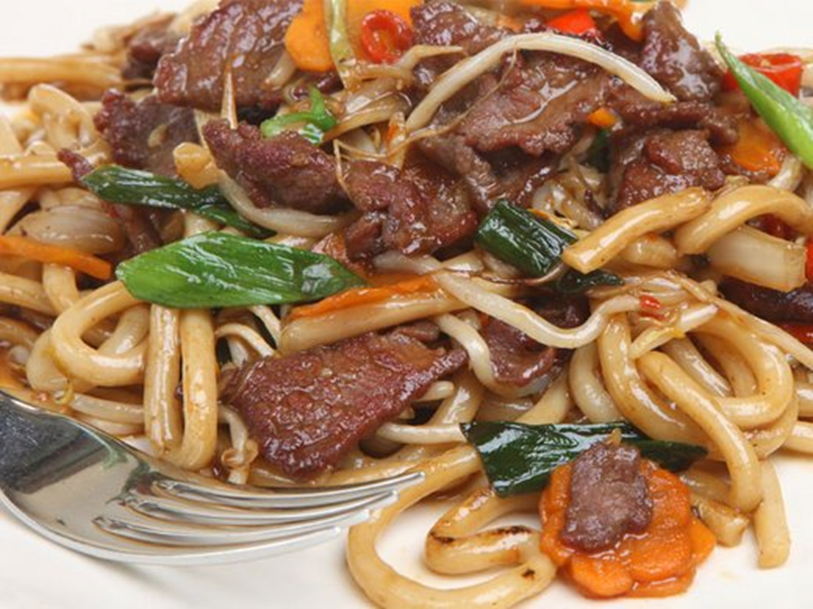
Source: nephrocare.it
Presentation
A nutritious recipe, consisting of a second course of French origin prepared with beef, pasta (Chinese noodles) or rice, lemongrass, snow peas, garlic, peanut oil, sesame oil, lime, cornstarch, ginger, parsley, coriander
Ingredients
Serves 4
200 g (7.1 oz) beef tenderloin or rump steak
200 g (7.1 oz) Chinese egg noodles or rice
1 stalk lemongrass, finely chopped (white part only)
150 g (5.3 oz) snow peas
1 garlic clove, peeled and minced
2 tablespoons peanut oil
2 tablespoons sesame oil
2 tablespoons lime juice
1 tablespoon cornstarch (maizena)
1 teaspoon grated ginger
Parsley, to taste
Fresh coriander, to taste
Method
Cut the beef into strips.
Cover it with cornstarch diluted in 1 tablespoon of sesame oil.
Add the finely chopped lemongrass and lime juice.
Leave the mixture in the refrigerator for 30 minutes.
Wash and clean the snow peas.
Bring the water to a boil in a pot and dip the tagliolini in it.
Cook them according to the cooking time indicated on the package.
Drain them and mix them with a tablespoon of sesame oil.
Set them aside.
Heat 1 tablespoon of peanut oil in a pan or wok.
Transfer the beef strips to the wok with the marinade and sauté them for 1 minute, stirring constantly. +
Remove the meat from the pot with the cooking juices and set aside.
Heat 1 tablespoon of oil in the wok and add the ginger and garlic and then the snow peas. Cook for about 2 minutes.
Also add the tagliolini, the meat strips and the cooking liquid.
Let everything flavor by stirring for 1-2 minutes.
Garnish with parsley and coriander.
Serve immediately.
Allergens
Garlic: very rare cases of garlic reactivity reported
Coriander: possible cross-reactivity in case of allergy to Artemisia and Composites
Lemongrass: direct allergy to the plant or other Gramineae
Limes: possible individual intolerance; possible cross-reaction in case of grass pollen allergy
Maizena: possible cross-reaction in case of sensitivity to grasses. Very high glycemic index
Peanut seed oil: peanuts included among the allergens in EU Regulation 1169/2011
Sesame seed oil: possible cross-reactivity in case of nut allergy
Pasta: contains gluten from cereals included in EU Regulation 1169/2011
Parsley: possible cross-reaction in case of allergy to spices, mugwort, composites
Rice: (allergy very common in the Far East, almost unknown in Italy and Europe). Possible cross-reaction in case of grass sensitivity
Snow peas: possible cross-reaction in case of allergy to parietaria. The intake of peas should be avoided in case of favism.
Ginger: possible reactivity in case of intolerance to spices
Notes
To be prepared and handled under strict hygienic conditions.
The ingredients of the dish bring the following benefits:
Garlic: has immune-stimulating properties, promotes liver function and the elimination of waste metabolites. It also has hypocholesterolemic, lipid-lowering, antiplatelet, hypotensive and hypoglycemic properties that promote cardiac function.
Beef: rich in selenium that supports the immune system. To reduce the presence of potassium, boil the meat in plenty of water which is then eliminated.
Coriander: useful in case of digestive problems also stimulating the appetite and able to alleviate tiredness and fatigue.
Lemongrass: natural stimulant useful in case of physical and mental fatigue. Also useful in cases of low blood pressure and asthenia.
Lime or lime: rich in substances with antioxidant action: vitamin C, beta-carotene, etc. that promote the regeneration of liver cells, the functionality of the immune system and that act to protect the cardiovascular system; also suitable for nephropathic patients and useful for the functioning of the liver for the supply of vitamins, mineral salts and antioxidants. A species that provides folic acid linked to the production of serotonin and therefore favorable to good mood and counteract depression
Cornstarch: excellent long-term source of energy thanks to the slow release of glucose into the blood
Peanut oil: source of Vitamin E that protects the immune system from harmful fatty acids. Useful for liver function for the supply of omega 3 and 6 fatty acids
Sesame oil: source of vitamins and minerals, in particular B vitamins, potassium, iron and copper that promote hematopoiesis, fatty acids that support the cardiovascular system, vitamin E, selenium and manganese, polyphenols (antioxidants) that support the immune system. Rich in magnesium and omega 3 fatty acids important for regulating mood and cognitive function
Pasta: if produced with wholemeal flour, which provides zinc, an element favorable to the proper functioning of the immune system; also suitable for nephropathic patients. Cereals stimulate the synthesis of serotonin which counteracts depression and promotes good mood
Parsley: rich in carotenoids that support the immune system and mineral salts, vitamins and antioxidants that act to protect the cardiovascular system; also suitable for nephropathic patients and useful for the functioning of the liver for the supply of vitamins, mineral salts and antioxidants
Rice: due to its modest protein content, it is suitable for nephropathic and phenylketonuric patients; since it is an antiuric food, it is recommended in case of gout and hyperuricemia. It stimulates the synthesis of serotonin which counteracts depression and promotes good mood
Snow peas: rich in vitamin C, the antioxidant par excellence that fights free radicals and supports the immune system, and provide mineral salts, vitamins and antioxidants that act to protect the cardiovascular system; also suitable for nephropathic patients. Useful for the functioning of the liver for the supply of vitamins, mineral salts and antioxidants. Especially if consumed with the peel, it provides folic acid linked to the production of serotonin and therefore favorable to good mood and counteract the depressed
Ginger: helps fight the sense of nausea and also has anti-inflammatory properties, facilitates digestion and strengthens the immune system
Safety / Intended use
Product also intended for subjects with:
- Anorexia – Weight Loss
- Nausea and vomiting
- Mucositis (inflammation and injury of the oral cavity)
Not recommended in case of:
- Dysphagia (problems chewing and swallowing)
- Diarrhea