Kaiserschmarrn with stewed plums
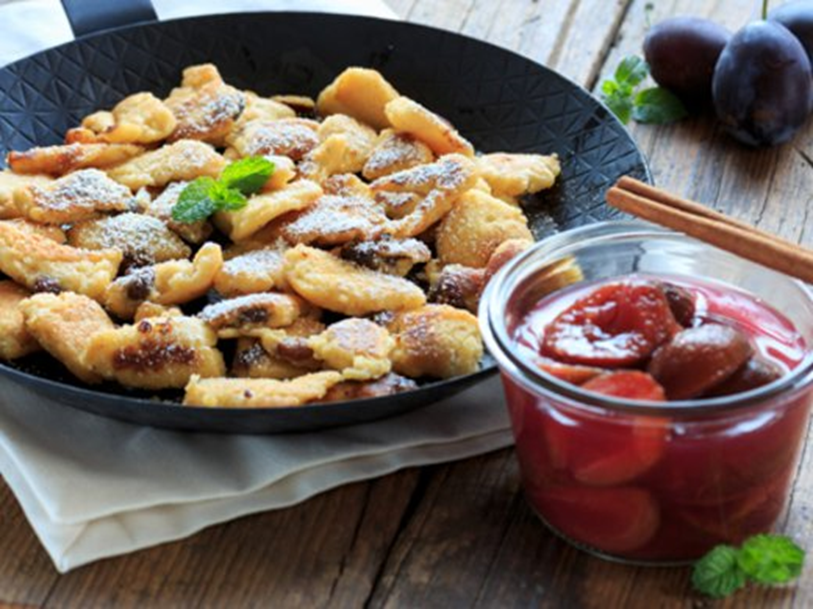
Source: nephrocare.it
Presentation
A nutritious recipe, consisting of a dessert of Austrian origin prepared with flour, milk, sugar, salt, eggs, sugar, butter, raisins, plums, lemon, cinnamon, cloves
Ingredients
Serves 4
For the Kaiserschmarrn
130 g (4.6 oz) all-purpose flour
250 ml (8.5 fl oz milk
1 tablespoon vanilla sugar
A pinch of salt
4 eggs
50 g (1.8 oz) sugar
50 g (1.8 oz) butter
40 g (1.4 oz) raisins, soaked in 20 ml rum
30 g (1.1 oz) sugar for caramelizing
For the Stewed Plums
250 g (8.8 oz) plums (canned or jarred)
50 g (1.8 oz) sugar
40 ml water
1 teaspoon lemon juice
½ cinnamon stick
2 cloves
Method
To the Kaiserschmarrn
Kaiserschmarrn is usually prepared in a pan, but it takes some practice to find the right temperature and timing.
Preheat the oven to 200 °C.
Divide the yolks and whites.
Beat the flour, milk, vanilla sugar and salt with a whisk until smooth.
Incorporate the egg yolks one at a time.
Beat the egg whites with the sugar until stiff and gently incorporate them into the mixture. Heat the butter in a baking dish (or a saucepan with a large bottom).
Pour the mixture into the baking dish and sprinkle it with raisins.
Bake it in a preheated oven for 15 minutes.
Remove the dish or saucepan from the oven and cut the mixture into quarters, turn them over and cook for another 10 minutes.
Remove the Kaiserschmarrn from the oven and cut into small pieces (with a fork or spatula)
Sprinkle it with sugar and put it back in the oven to caramelize slightly.
Remove it from the oven again, transfer it to plates, sprinkle with icing sugar and serve.
For the stewed plums:
Cut the plums in half and remove the stone.
Boil water in a pot with the sugar, lemon juice, half a cinnamon stick and cloves
Add the plums and bring back to the boil, stirring constantly.
Keep boiling until the plums begin to unravel, then remove the spices.
Allergens
Butter: milk allergens (except in clarified butter) if not clarified
Cinnamon: possible reactivity in case of intolerance to spices
Cloves: possible, albeit rare, cases of allergy
Flour: contains gluten from cereals included in EU Regulation 1169/2011
Milk: included among the allergens in EU Regulation 1169/2011
Lemon: Lemon intolerance or possible cross-reaction in case of grass pollen allergy
Plums: possible intolerance to the fruit or cross-reactivity in case of allergy to Birch and Grasses
Egg: included among the allergens in EU Regulation 1169/2011
Raisins: possible presence of sulphites
Notes
To reduce the potassium of the Kaiserschmarrn, you can omit the raisins
The ingredients of the dish bring the following benefits:
Butter: source of fat-soluble vitamins (A, D, E and K) favorable to the health of the eyes, mucous membranes, bones, immune system and blood clotting.
Cinnamon: able to strengthen the immune system
Cloves: rich in antioxidants that can strengthen the immune system
Cloves: rich in antioxidants that can strengthen the immune system
Flour: provides B vitamins (thiamine, niacin, riboflavin and folate), which are important for energy metabolism and the functioning of the nervous system.
Whole milk: provides vitamins, minerals and antioxidants, promoting metabolism, cardiovascular function, tooth and bone health. The presence of tryptophan helps to counteract depression. Provides and promotes the absorption of fat-soluble vitamins (A, D, E.K)
Lemon: Rich in substances with antioxidant action: vitamin C, beta-carotene, cryptoxanthin, lutein and zeaxanthin, which promote the regeneration of liver cells, the functionality of the immune system and which act to protect the cardiovascular system; also suitable for nephropathic patients and useful for the functioning of the liver for the supply of vitamins, mineral salts and antioxidants. A species that provides folic acid linked to the production of serotonin and therefore favorable to good mood and counteract depression
Plums: rich in antioxidants such as flavonoids and polyphenols that promote liver function and the process of elimination of toxins, promote intestinal function through the diphenylysatene present in the pulp, provide mineral salts, vitamins and antioxidants that act to protect the cardiovascular system; also suitable for nephropathic patients. Useful for the functioning of the liver for the supply of vitamins, mineral salts and antioxidants. Especially if consumed with the peel, they provide folic acid linked to the production of serotonin and therefore favorable to good mood and counteract depression
Salt: essential for the balance of body fluids and for the transmission of nerve impulses, it is however to be consumed respecting the limit of 5 g per day according to the indications of the WHO so as not to promote arterial hypertension and consequent increase in the risk of cardio-cerebrovascular diseases starting from myocardial infarction and cerebral stroke; to be limited as much as possible in the case of nephropathy.
Egg: source of Vitamin E that protects the immune system from harmful fatty acids. Rich in Vitamin D that fights mood disorders
Raisins (Sultanas): source of antioxidants, including resveratrol, with anti-inflammatory, anticancer properties and able to reduce blood cholesterol levels. It provides folic acid linked to the production of serotonin and therefore favorable to good mood and counteract depression
Sugar: if consumed in moderation without contraindications (diabetes, obesity,) it is the main source of energy for the body, improves thinking ability, has a positive effect on mood
Safety / Intended use
Can also be administered in case of:
- Anorexia – Weight Loss
- Nausea and vomiting
Not to be administered to individuals suffering from:
- Mucositis – Inflammation and Lesions of the oral cavity
- Xerostomia (dry mouth)
- Dysphagia (problems chewing and swallowing)