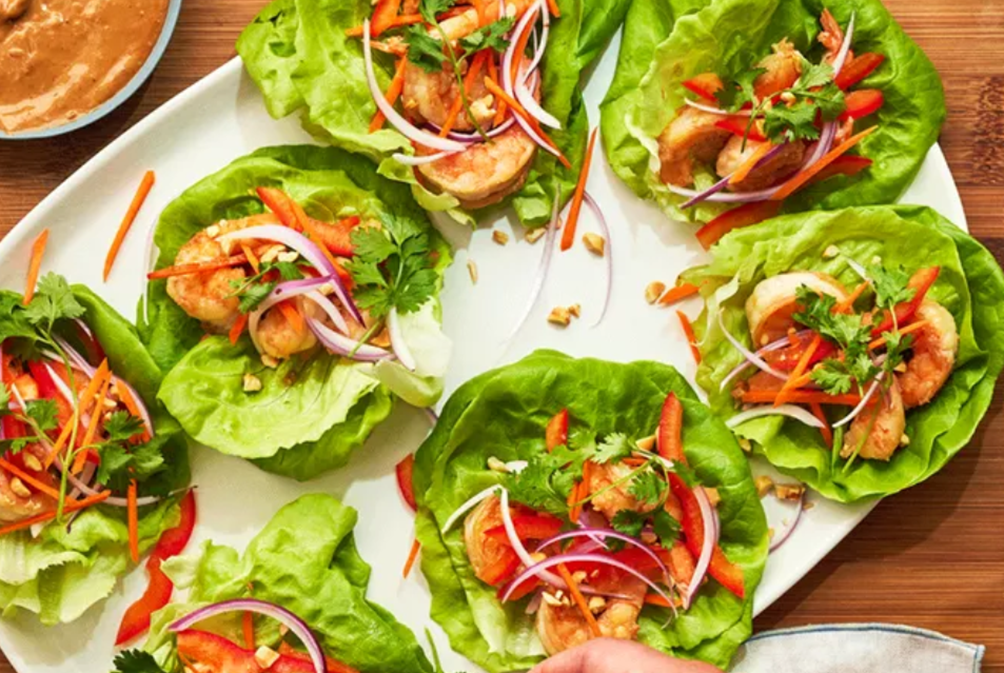
Lettuce rolls with shrimp
Source: tuttodiabete.it
Presentation
A nutritious recipe, consisting of a main course or single dish prepared with extra virgin olive oil, shrimp, soy sauce, garlic, coconut “milk”, peanut butter, hoisi sauce, lime, sugar, sambal oelek, ginger, lettuce, peppers, carrots, onion, peanuts, coriander
Ingredients
Extra-virgin olive oil: 2 tablespoons (30 ml / 1 fl oz)
Raw medium prawns, peeled: 50 g (1.8 oz / ≈ 8–10 prawns)
Low-sodium soy sauce: 1 tablespoon (15 ml / 0.5 fl oz), divided
Grated garlic: 2.5 teaspoons (≈ 7.5 g / 0.26 oz), divided
Light coconut milk: 80 ml (2.7 fl oz / ⅓ cup)
Creamy natural peanut butter: 80 g (2.8 oz / ≈ ⅓ cup)
Hoisin sauce: 2 tablespoons (30 ml / 1 fl oz)
Lime juice: 1 tablespoon (15 ml / 0.5 fl oz)
Sugar : 1.5 teaspoons (≈ 6 g / 0.2 oz)
Sambal oelek: 1 teaspoon (≈ 5 g / 0.18 oz)
Grated fresh ginger: ½ teaspoon (≈ 1 g / 0.035 oz)
Lettuce leaves: 16 leaves (≈ 200 g / 7 oz total)
Red bell peppers – 2 medium (≈ 200 g / 7 oz / 2 cups thin strips)
Carrots: 2 medium (≈ 120 g / 4.2 oz / 1 cup thin strips)
Red onion: 1 medium (≈ 150 g / 5.3 oz / 1 cup thinly sliced)
Unsalted roasted peanuts, chopped: 2 tablespoons (≈ 20 g / 0.7 oz)
Fresh coriander leaves: 60 g (2.1 oz / ≈ 1 cup loosely packed)
Method
Heat the oil in a large skillet over medium heat.
Add the shrimp in a single layer
Cook, without stirring, until slightly pink on one side, (about two minutes).
Add 1.5 teaspoons of soy sauce and 1.5 teaspoons of garlic
Stir until the shrimp are well coated.
Cook, stirring frequently, until cooked through (about two minutes).
Transfer to a plate with the cooking juices from the pan.
In a medium bowl, whisk together the coconut “milk,” peanut butter, hoisin sauce, lime juice, sugar, sambal oelek, ginger, the remaining 1 teaspoon garlic, and 1 1/2 teaspoons soy sauce until smooth.
Form 8 mounds of 2 lettuce leaves each.
Divide the shrimp, peppers, carrots, onion, and peanuts evenly among the lettuce leaves.
Top with coriander.
Serve with the peanut sauce.
Allergens
Garlic: very rare cases of garlic reactivity reported
Peanuts: included among the allergens in EU Regulation 1169/2011
Peanut butter: peanuts included among the allergens in EU Regulation 1169/2011
Carrot: possible individual intolerance and cross-reactivity in case of allergy to pollen of Artemisia, Graminaceae, Composite, Birch
Onion: possible reactivity in case of nickel allergy due to the vegetable’s ability to concentrate it
Onion: possible reactivity in case of nickel allergy due to the vegetable’s ability to concentrate it
Coriander: possible cross-reactivity in case of allergy to Artemisia and Composites
Prawns: fish products included among the allergens in EU Regulation 1169/2011
Coconut “milk”: possible cases of intolerance
Lettuce: individual cases of intolerance described
Limes: possible individual intolerance; possible cross-reaction in case of grass pollen allergy
Extra virgin olive oil: unusual allergy; intolerance not described
Peppers: possible individual intolerance or cross-reactivity in case of allergy to grasses
Soy sauce: contains and wheat, allergens covered by EU Regulation 1169/2011
Ginger: possible reactivity in case of intolerance to spices
Notes
To be prepared and handled under strict hygienic conditions.
Hoisin sauce: Chinese condiment made from fermented soybeans and other ingredients including sweet potatoes, wheat and rice and water, sugar, sesame seeds, distilled white vinegar, garlic, chili pepper
Sambal olek : a spicy and spicy oriental sauce made from chillies, garlic or shallots, vegetables and salt
“Milk” is a very common term but by law it can only be used for the mammary secretion of animals. In fact, in 2017 the Court of Justice of the European Union prohibited the use of the term “milk” for plant products.
It is therefore correct to speak of a drink
The ingredients of the dish bring the following benefits:
Garlic: has immune-stimulating properties, promotes liver function and the elimination of waste metabolites. It also has hypocholesterolemic, lipid-lowering, antiplatelet, hypotensive and hypoglycemic properties that promote cardiac function.
Peanuts: rich in vitamin E and omega 3 fatty acids that fight the increase in blood pressure and the presence of bad cholesterol by promoting the functionality of the cardiovascular system, they are a valid ally for the functionality of the immune system and against cardiovascular risk; also suitable for nephropathic patients and useful for the functioning of the liver for the contribution of vitamins, Mineral salts and antioxidants. Rich in magnesium and omega 3 fatty acids important for regulating mood and cognitive function
Peanut butter: also suitable for nephropathic patients. Useful for liver function for the supply of omega 3 and 6 fatty acids
Carrots: rich in vitamins (B1, B2, C, PP, E, D), carotenoids, minerals and active ingredients that support the functionality of the immune system and ophthalmic, diuretic and healing functions and act to protect the cardiovascular system. Also suitable for nephropathic patients and useful for the functioning of the liver for the contribution of vitamins, mineral salts and antioxidants. They provide folic acid linked to the production of serotonin and therefore favorable to good mood and counteract depression
Coriander: traditional Indian medicine involves the use of this plant among other things in case of bladder disorders, keep the nervous system and memory efficient
Prawns: they provide zinc and selenium, elements that promote the proper functioning of the immune system by hindering the formation of prostaglandins that prevent good cellular functioning and has a high content of omega 3 fatty acids, which inhibit platelet aggregation (cardiovascular risk factor). Useful for liver function due to the supply of zinc, selenium and omega 3 and 6 fatty acids. Essential fatty acids, such as omega 3 and 6, have an antidepressant effect and maintain efficient nervous system and memory
Coconut “milk”: rich in vitamins, minerals, vitamin C and E that support the immune system. It has mildly diuretic properties
Lettuce: rich in carotenoids that support the immune system and mineral salts, vitamins and antioxidants that act to protect the cardiovascular system; also suitable for nephropathic patients; useful for the functioning of the liver for the supply of vitamins, mineral salts and antioxidants-It provides folic acid linked to the production of serotonin and therefore favorable to good mood and counteract depression
Lime or lime: rich in substances with antioxidant action: vitamin C, beta-carotene, etc. that promote the regeneration of liver cells, the functionality of the immune system and that act to protect the cardiovascular system; also suitable for nephropathic patients and useful for the functioning of the liver for the supply of vitamins, mineral salts and antioxidants. A species that provides folic acid linked to the production of serotonin and therefore favorable to good mood and counteract depression
Extra virgin olive oil: source of Vitamin E that protects the immune system from harmful fatty acids
Bell pepper: rich in vitamin C and carotenoids, antioxidant par excellence that fight free radicals and support the immune system, and mineral salts; also suitable for nephropathics, vitamins and antioxidants that act to protect the cardiovascular system. Useful for the functioning of the liver for the supply of vitamins, mineral salts and antioxidants. It provides folic acid linked to the production of serotonin and therefore favorable to good mood and counteract depression
Soy sauce: rich in antioxidants, essential amino acids, vegetable proteins, vitamins and minerals, which can promote cardiovascular function, counteract inflammation, support low-calorie diets and can also replace salt.
Ginger: helps fight the sense of nausea and also has anti-inflammatory properties, facilitates digestion and strengthens the immune system
Sugar: if consumed in moderation without contraindications (diabetes, obesity,) it is the main source of energy for the body, improves thinking ability, has a positive effect on mood
Safety / Intended use
Product also intended for subjects with:
- Anorexia – Weight Loss
Not recommended in case of:
- Dysphagia (problems chewing and swallowing)
- Nausea and vomiting
- Mucositis (inflammation and injury of the oral cavity)