BLACK BEAN SOUP
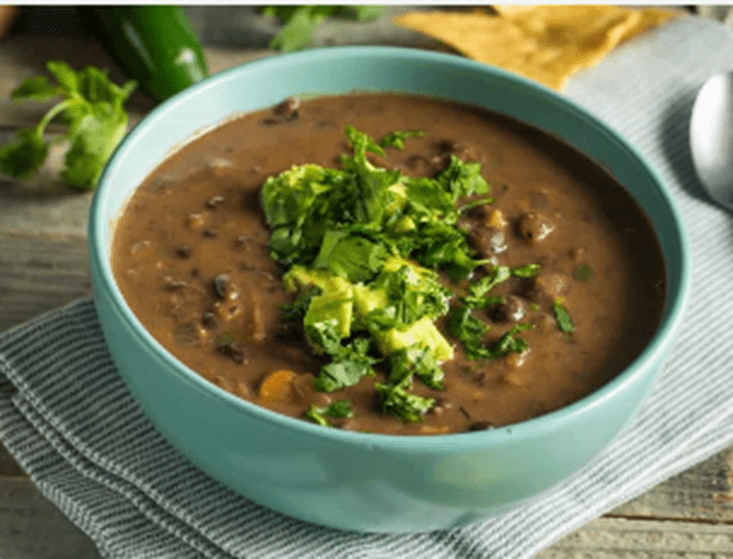
Source: liverfoundation.org
PRESENTATION
First course prepared with beans, vegetable broth, extra virgin olive oil, onion, garlic, carrot, celery, bell pepper, cumin, paprika, oregano, bay leaf, tomatoes, coriander, lime juice, black pepper
INGREDIENTS:
- 1 lb (about 2 cups) dried black beans, soaked overnight and drained
- 6 cups low-sodium vegetable broth (or water)
- 1 tablespoon olive oil
- 1 medium onion, chopped
- 3 cloves garlic, minced
- 1 medium carrot, diced
- 1 celery stalk, diced
- 1 bell pepper (any color), diced
- 1 teaspoon ground cumin
- 1 teaspoon paprika
- 1/2 teaspoon dried oregano
- 1 bay leaf
- 1 cup diced tomatoes (canned or fresh)
- 1 cup chopped fresh cilantro (optional)
- Juice of 1 lime
- Freshly ground black pepper to taste
INSTRUCTIONS:
- Soak the dried black beans in plenty of water overnight. Drain and rinse the beans before using. You can also use canned here instead if you’re short on time.
- In a large pot, heat the olive oil over medium heat. Add the chopped onion, garlic, carrot, celery, and bell pepper. Sauté until the vegetables are softened, about 5-7 minutes.
- Stir in the cumin, paprika, oregano, and bay leaf. Cook for another 1-2 minutes until fragrant.
- Add the soaked (if using canned, wait to add beans and see step 5) black beans, vegetable broth (or water), and diced tomatoes to the pot. Bring to a boil.
- Reduce the heat to low and let the soup simmer, uncovered, for about 1.5 to 2 hours, or until the beans are tender. Stir occasionally and check the soup for seasoning. *If using canned beans, cook tomatoes in vegetable broth first for 30 minutes first, then add canned beans and cook for another 20 minutes.
- Once the beans are tender, remove the bay leaf. For a smoother texture, use an immersion blender to partially blend the soup, leaving some beans whole. Stir in the lime juice and cilantro (if using). Season with freshly ground black pepper to taste.
ALLERGENS:
Garlic: very rare cases of reactivity to garlic reported
Bay leaf: possible individual allergy
Vegetable broth: check the composition to verify the absence of celery or other allergenic ingredients
Carrot: possible individual intolerance and cross-reactivity in case of allergy to Artemisia, Graminaceae, Composite, Birch pollens
Onion: possible reactivity in case of nickel allergy due to the vegetable’s ability to concentrate it
Coriander: possible cross-reactivity in case of allergy to Artemisia and Composite
Cumin: possible cross-reactivity in case of allergy to Artemisia and Composite
Beans: possible cross-reaction in case of allergy to parietaria
Lime: possible individual intolerance; possible cross-reaction in case of allergy to grass pollens
Extra virgin olive oil: allergy is unusual; intolerance not described
Oregano: reactivity in case of sensitivity to Lamiaceae (or Labiatae): thyme, sage, mint, rosemary, nepeta
Paprika: possible cross-reactivity in case of spice intolerance
Pepper (green, pink, black, gray, white): possible cross-reactivity in case of spice intolerance
Peppers: possible individual intolerance or cross-reactivity in case of allergy to Graminaceae
Tomatoes: possible cross-reaction in case of sensitivity to grasses
Celery: included among the allergens in EU Regulation 1169/2011
NOTE
- To be prepared and handled under rigorous hygienic conditions.
The ingredients in this dish provide the following benefits:
- Garlic: It has immunostimulant properties, promotes liver function, and promotes the elimination of waste products. It also has cholesterol-lowering, lipid-lowering, antiplatelet, hypotensive, and hypoglycemic properties, which promote cardiac function.
- Laurel: Its leaves and berries have diuretic properties. The leaves are rich in vitamin C, which promotes healthy immune system function, and minerals that promote red blood cell production and cardiovascular function.
- Vegetable broth: It provides minerals, especially sodium and potassium, which are useful for regulating heart function and water retention.
- Carrots: Rich in vitamins (B1, B2, C, PP, E, and D), carotenoids, minerals, and active ingredients that support the immune system and ophthalmic functions, as well as being diuretic and healing, and protect the cardiovascular system. Also recommended for kidney patients and beneficial for liver function due to their vitamins, minerals, and antioxidants. They provide folic acid, which is linked to serotonin production and thus promotes a good mood and combats depression.
- Onions: Rich in selenium, which supports the immune system and stabilizes blood glucose levels within normal ranges. They also provide quercetin, a flavonoid that helps control blood cholesterol and triglyceride levels, parameters associated with cardiovascular risk. Quercetin also supports liver function by promoting detoxification. Also recommended for kidney patients, it is a good diuretic that prevents kidney stones. Especially when consumed with the peel, it provides folic acid, which is linked to the production of serotonin and therefore promotes a good mood and helps combat depression.
- Coriander: Traditional Indian medicine includes the use of this plant, among other things, for bladder problems.
- Cumin: Cumin’s beneficial effects for diarrhea and kidney stones, as attributed by Indian medicine, are not recognized.
- Beans: A source of zinc and factors that support the proper functioning of the immune system, as well as minerals, vitamins, and antioxidants, it protects the cardiovascular system. Also recommended for kidney patients. Helpful for liver function due to its supply of vitamins, minerals, and antioxidants. Especially when consumed with the skin, they provide folic acid, which is linked to the production of serotonin and therefore promotes a good mood and combats depression.
- Lime: Rich in antioxidants: vitamin C, beta-carotene, etc., which promote liver cell regeneration, immune system function, and protect the cardiovascular system. Also recommended for kidney patients and beneficial for liver function due to its vitamins, minerals, and antioxidants. Lime provides folic acid, which is linked to serotonin production and therefore promotes a good mood and combats depression.
- Extra virgin olive oil: A source of vitamin E, which protects the immune system from harmful fatty acids.
- Oregano: Provides antioxidants and vitamin E, which promote healthy immune system function.
- Paprika: rich in vitamin C, the antioxidant par excellence that fights free radicals and supports the immune system.
- Pepper (green, pink, black, gray, white): contains piperine, a powerful antioxidant; it improves insulin sensitivity by reducing cholesterol levels and activating the metabolism. Recommended for people with cardiovascular problems.
- Peppers: rich in vitamin C and carotenoids, the antioxidant par excellence that fights free radicals and supports the immune system, and minerals; also recommended for kidney patients, vitamins and antioxidants that protect the cardiovascular system. Helps liver function due to its supply of vitamins, minerals, and antioxidants. It provides folic acid, which is linked to the production of serotonin and therefore promotes a good mood and combats depression.
- Tomato: Rich in vitamin C, the antioxidant par excellence that fights free radicals and supports the immune system, and provides minerals, vitamins, and antioxidants that protect the cardiovascular system; also suitable for kidney patients. Helps liver function due to its supply of vitamins, minerals, and antioxidants. Especially when eaten with the skin, it provides folic acid, which is linked to the production of serotonin and therefore promotes a good mood and combats depression.
- Celery: Rich in carotenoids that support the immune system, and minerals, vitamins, and antioxidants that protect the cardiovascular system, and useful for liver function due to its supply of vitamins, minerals, and antioxidants. Suitable for those with cholesterol problems, as it promotes its elimination. This species provides folic acid, which is linked to the production of serotonin and therefore promotes a good mood and combats depression.
SAFETY / INTENDED USE
This product is also suitable for individuals with:
- Anorexia – Weight loss
- Mucositis – Inflammation and lesions of the oral cavity, depending on the degree of pungency and acidity
- Xerostomia (Dry mouth)
Do not administer in cases of:
- Dysphagia (Problems chewing and swallowing) unless pureed
- Constipation with flatulence
- Diarrhea