Low-protein boat aubergines
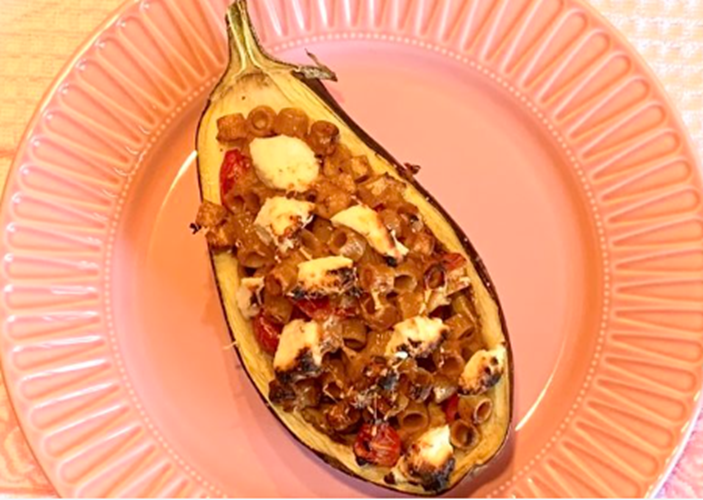
Source: renalize.it
Presentation
A nutritious recipe, consisting of a side dish prepared with eggplant, short pasta, olives, Grana Padano PDO, garlic, tomatoes, salt, extra virgin olive oil.
Ingredients
for 4 people:
2 long eggplants
200 g (7.1 oz) low-protein short pasta
50 g (1.8 oz) Taggiasca olives
40 g (1.4 oz) grated Grana Padano cheese
1 garlic clove
150 g (5.3 oz) datterini tomatoes or other preferred tomatoes
Ricotta cheese, to taste
Salt, to taste
4 tablespoons extra-virgin olive oil
Method
Cut the aubergines in half lengthwise and empty them.
Cut the pulp into cubes.
Fry 2 tablespoons of oil with a clove of garlic and
Add the eggplant cubes for a few minutes until they are cooked.
Separately, cut the cherry tomatoes into small pieces and, together with the olives, add them to the eggplant.
In the meantime, cook the pasta and drain it al dente.
Add it to the dressing
Add half of the Grana Padano cheese and mix well.
Stuff the eggplant boats with the filling
Put the ricotta flakes and the remaining parmesan cheese.
Transfer them to a baking tray lined with parchment paper and sprinkle the aubergines with a little oil.
Bake in a preheated oven at 180 ° for about 40 minutes.
After 20 minutes, cover with aluminum foil and continue cooking.
Allergens
Garlic: very rare cases of garlic reactivity reported
Grana Padano PDO: milk allergens, lysozyme from eggs
Aubergine: possible individual intolerance or cross-reactivity in case of grass allergy
Extra virgin olive oil: unusual allergy; intolerance not described
Olives: olive allergy is very rare: a case described in Spain
Pasta: contains gluten from cereals included in EU Regulation 1169/2011
Tomatoes: possible cross-reaction in case of sensitivity to grasses
Cottage cheese: milk allergens
Notes
To be prepared and handled under strict hygienic conditions.
The ingredients of the dish bring the following benefits:
Garlic: has immune-stimulating properties, promotes liver function and the elimination of waste metabolites. It also has hypocholesterolemic, lipid-lowering, antiplatelet, hypotensive and hypoglycemic properties that promote cardiac function.
Grana Padano PDO: useful for the proper functioning of the liver. The presence of tryptophan helps to counteract depression
Aubergine: provides flavonoids (Vit. P), antioxidants that enhance the action of Vit. C in favor of the immune system and mineral salts, vitamins and antioxidants that act to protect the cardiovascular system; also suitable for nephropathic patients. Useful for the functioning of the liver for the supply of vitamins, mineral salts and antioxidants. Especially if consumed with the peel, it provides folic acid linked to the production of serotonin and therefore favorable to good mood and counteract the depressed
Extra virgin olive oil: source of Vitamin E that protects the immune system from harmful fatty acids
Olive: source of Vitamin E that protects the immune system from harmful fatty acids. Useful for liver function for the supply of omega 3 and 6 fatty acids
Pasta: if produced with wholemeal flour, which provides zinc, an element favorable to the proper functioning of the immune system; also suitable for nephropathic patients. Cereals stimulate the synthesis of serotonin which counteracts depression and promotes good mood
Tomato: rich in vitamin C, the antioxidant par excellence that fights free radicals and supports the immune system, and provides mineral salts, vitamins and antioxidants that act to protect the cardiovascular system; also suitable for nephropathic patients. Useful for the functioning of the liver for the supply of vitamins, mineral salts and antioxidants. Especially if consumed with the peel, it provides folic acid linked to the production of serotonin and therefore favorable to good mood and counteract depression
Ricotta. Useful for the functioning of the liver for the supply of vitamins, mineral salts and antioxidants and for the proper functioning of the cardiovascular system. The presence of tryptophan helps to counteract depression
Salt: essential for the balance of body fluids and for the transmission of nerve impulses, it is however to be consumed respecting the limit of 5 g per day according to the indications of the WHO so as not to promote arterial hypertension and consequent increase in the risk of cardio-cerebrovascular diseases starting from myocardial infarction and cerebral stroke; to be limited as much as possible in the case of nephropathy.
Safety / Intended use
Product that can also be used in the case of:
- Renal impairment
- Anorexia – Weight loss
- Constipation
- Xerostomia (dry mouth)
- Mucositis (inflammation and injury of the oral cavity
Not recommended in case of:
- Dysphagia (problems chewing and swallowing)
- Constipation with meteorism
- Diarrhea