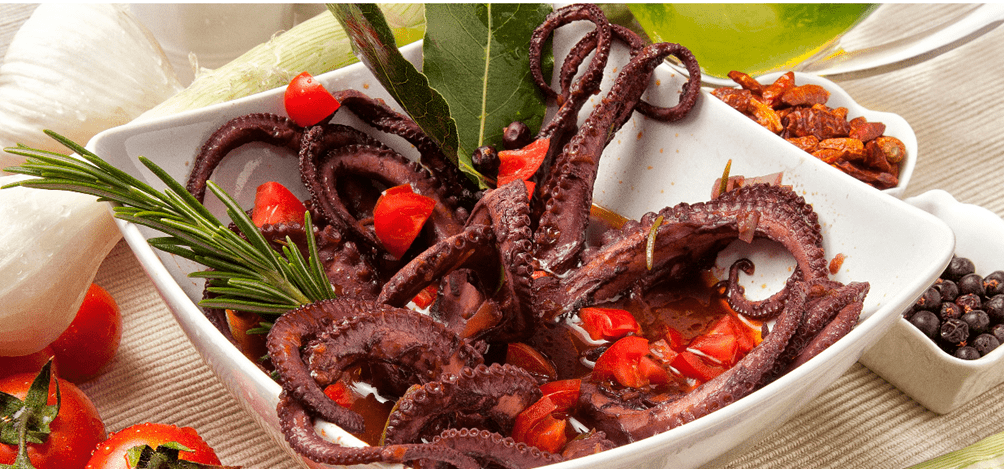
PORT-STYLE BABY OCTOPUS STEW
Source: educazionenutrizionale.granapadano.it
PRESENTATION
A main course prepared with baby octopus, Pachino tomatoes, tomato purée, extra-virgin olive oil, garlic, onion, parsley, bay leaves, rosemary, sage, juniper berries, red wine, salt, and chili pepper.
INGREDIENTS:
Serves 4
28 oz fresh baby octopus
7 oz fresh Pachino tomatoes
7 oz g tomato purée
0,7 oz extra-virgin olive oil
3 garlic cloves
1 medium onion
Parsley, to taste
2 bay leaves
2 sprigs rosemary
6 sage leaves
8 juniper berries
1 liter water
13,5 oz Sicilian red wine (“Syrah” or “Nero d’Avola”)
Salt, to taste
Chili pepper, to taste
METOD
In a saucepan, sauté a finely chopped mixture of parsley, onion, garlic, and chili pepper in the olive oil.
Add the cherry tomatoes cut in half and the baby octopus, washed and cut by separating the head from the tentacles.
Deglaze with the red wine and lower the heat.
After a few minutes, add the tomato purée, water, aromatic herbs, and juniper berries. Simmer the stew over medium heat for about 45 minutes.
Let it reduce until the baby octopus is tender.
Serve.
ALLERGENS:
- Garlic: very rare cases of garlic reactivity have been reported
- Bay leaf: possible individual allergy
- Juniper: specific allergy possible, mainly related to pollen
- Onion: possible reactivity in individuals with nickel allergy due to the vegetable’s ability to concentrate it
- Extra-virgin olive oil: allergy is uncommon; intolerance has not been described
- Chili pepper: possible cross-reactivity in cases of spice intolerance
- Octopus: seafood products are listed among allergens under EU Regulation 1169/2011
- Tomatoes: possible cross-reactivity in individuals sensitive to grass pollens
- Parsley: possible cross-reactivity in cases of allergy to spices, Artemisia, or Asteraceae
- Rosemary: possible reaction in cases of spice intolerance
- Sage: possible cross-reactivity in individuals sensitive to Asteraceae
- Red wine: (moderate consumption) rich in resveratrol; has antioxidant properties, counteracts “bad” cholesterol and increases “good” cholesterol, reducing the risk of heart attack and stroke
NOTE
- Prepare and handle under strict hygienic conditions.
- The wine may be used in recipes intended for children as well, since the alcohol evaporates during cooking while the aroma remains.
Nutritional Benefits of the Ingredients
- Garlic: has immune-stimulating properties, supports liver function, and promotes the elimination of waste metabolites; also has cholesterol-lowering, lipid-lowering, antiplatelet, hypotensive, and hypoglycemic effects that support heart health
- Bay leaf: leaves and berries have diuretic properties; the leaves are rich in vitamin C, which supports immune system function, and minerals that aid red blood cell production and cardiovascular health
- Juniper (berries): has diuretic properties; extracts are used in cases of liver dysfunction (chronic hepatitis, liver failure, cirrhosis, hypertrophic alcoholic cirrhosis, hepatic colic), kidney disorders (renal failure, fluid retention, lipoid nephrosis, oliguria, gout), diabetes mellitus, hypercholesterolemia, and arteriosclerosis
- Onion: rich in selenium, which supports the immune system, and helps stabilize blood glucose levels; provides quercetin, a flavonoid that helps reduce blood cholesterol and triglycerides—factors associated with cardiovascular risk—and supports liver detoxification; also suitable for people with kidney disease
- Extra-virgin olive oil: a source of vitamin E that protects the immune system from harmful fatty acids
- Chili pepper: rich in vitamin C, a powerful antioxidant that combats free radicals and supports the immune system
- Octopus: rich in iron and vitamin B12, beneficial for cardiovascular health and proper red blood cell synthesis; also provides selenium and omega-3 fatty acids that support immune system function and liver health
- Tomato: rich in vitamin C, a powerful antioxidant that combats free radicals and supports the immune system; also provides minerals, vitamins, and antioxidants that protect the cardiovascular system; suitable for people with kidney disease and beneficial for liver function
- Parsley: rich in carotenoids, minerals, vitamins, and antioxidants that support the immune system and protect the cardiovascular system; suitable for people with kidney disease and beneficial for liver function
- Rosemary: rich in compounds that support kidney function (by stimulating diuresis), promote cardiovascular health by encouraging perspiration, and support liver function by stimulating bile secretion
- Sage: contains chlorophyll with detoxifying properties and supports proper immune system function; suitable for people with kidney disease and beneficial for liver function
- Red wine: (moderate consumption) rich in resveratrol; has antioxidant properties, counteracts “bad” cholesterol, and increases “good” cholesterol, reducing the risk of heart attack and stroke
SAFETY / INTENDED USE
Also suitable for individuals with:
- Anorexia / weight loss
Do not administer, or use with caution, in cases of:
- Mucositis (inflammation and lesions of the oral cavity), due to acidity and spiciness
- Dysphagia (chewing and swallowing difficulties)